
Difference Between Preschool and Nursery: Which Is Right for Your Child in India?
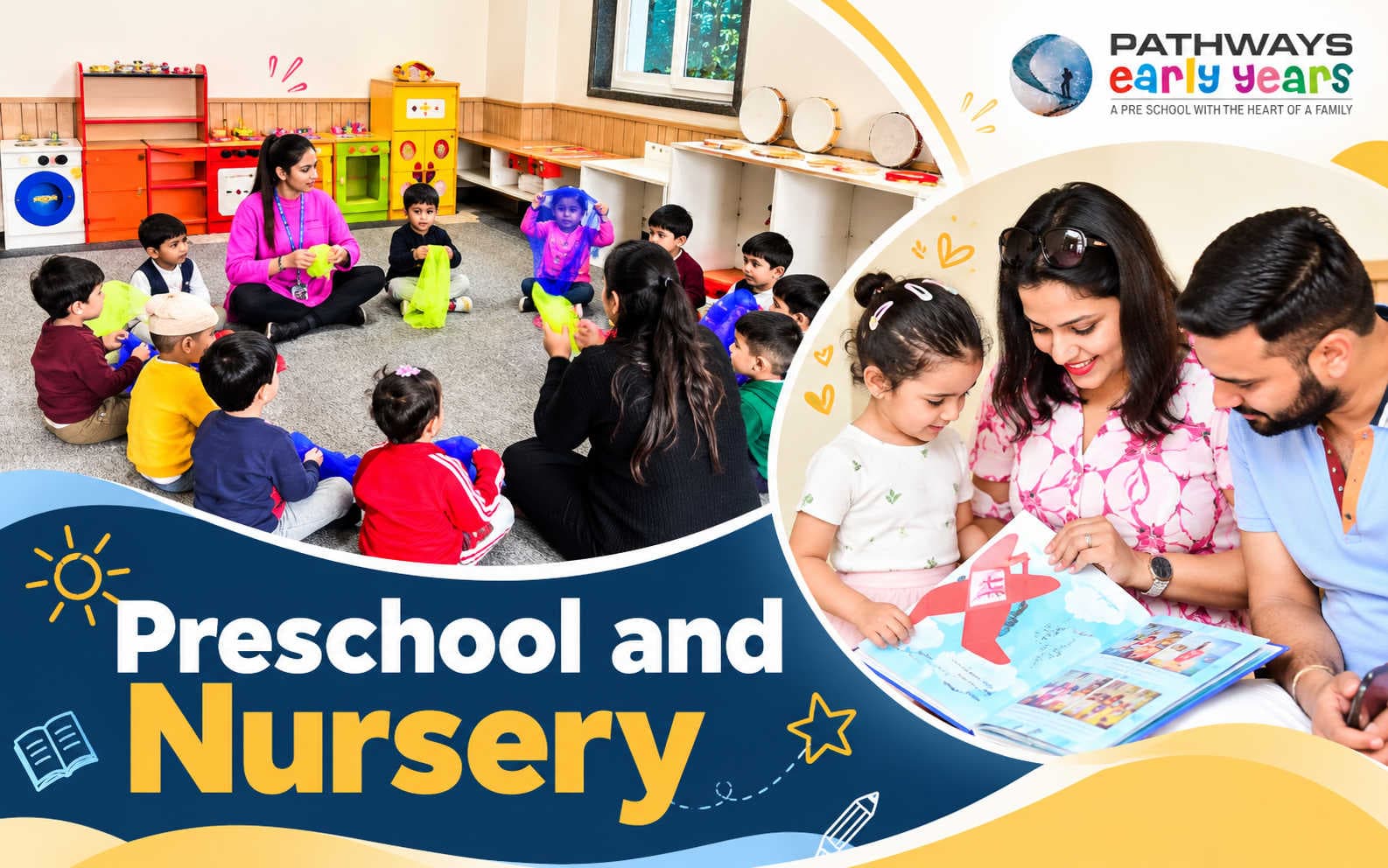
At Pathways Early Years, preschool includes several age-based programmes, while nursery is one group for ages 4-5. Pre-nursery comes before nursery, followed by kindergarten. Confirm your child's placement with the school.
The difference between preschool and nursery becomes clearer when you look at how Pathways Early Years, Shalimar Bagh, organises its programmes. Its preschool offering includes several age groups, with nursery as one named programme within that offering. You are therefore choosing an age group within a preschool, rather than choosing between two separate kinds of school.
For parents comparing options in India, the practical starting point is the school's own programme information. At Pathways, the published nursery age band is 4-5 years. This guide uses the information on the Pathways website, so the ages and programme names below refer specifically to its Shalimar Bagh offering.
Start with the age table, then consider the learning approach, classroom support and care arrangements. Together, these give you a more useful picture than the word "nursery" on its own.
Key Takeaways
· Preschool covers several programmes: Nursery is one part of the Pathways preschool offering.
· Pre-nursery comes before nursery: The website lists these as separate age groups.
· Use the published age table: Check your child's likely programme before enquiring.
· Kindergarten follows nursery: Pathways lists kindergarten rather than separate LKG and UKG programmes.
· Learning includes hands-on experiences: The school describes an experiential approach.
· Care needs deserve attention too: Review daycare separately if you need it.
What Is the Difference Between Preschool and Nursery at Pathways?
Preschool is the broader offering, while nursery is a specific programme within it. This distinction follows the structure of the Pathways preschool programme page, which lists five groups.
Comparison | Preschool offering | Nursery programme |
Scope | Several age-based programmes | One named group |
Position | Includes the groups in the table below | Between pre-nursery and kindergarten |
Parent's next step | Explore the available groups | Discuss the listed nursery group with admissions |
This is a practical way to understand nursery vs preschool without treating the labels as competing choices. When you enquire, name the programme you are interested in and share your child's age.
What Ages and Programme Durations Does Pathways Publish?
The website lists the following ages and durations. These are Pathways' programme details, not an all-India admission chart.
Programme | Published age band |
Pre-Toddlers | 12 months-2 years |
Toddlers | 2-3 years |
Pre-Nursery | 3-4 years |
Nursery | 4-5 years |
Kindergarten | 5-6 years |
Use this table to begin an admissions conversation. For a birthday near a boundary, ask the team which group applies and how the listed duration fits the daily timetable.
Avoid making a placement decision from the age number alone. A conversation also gives you space to explain your child's routines and ask practical questions about the school day.
What Is Pre Nursery, and How Does It Compare with Nursery?
Pre-nursery means the programme placed before nursery in Pathways' published sequence. The nursery and pre nursery difference shown on the website is the age band and listed duration.
Those details help you identify which programme to ask about. They do not, by themselves, explain every classroom activity or establish an individual admission decision.
What should you ask about the two groups?
Ask the team to describe an ordinary day in each group. How are activities introduced? How do teachers support a child who needs help joining in? What changes as children move to the next programme?
These are questions for a visit, rather than assumptions about a fixed syllabus. A clear explanation can help you understand what the programme would mean for your own child.
How Should You Compare Preschool, Nursery and Kindergarten?
For a preschool vs nursery vs kindergarten comparison, use the school's published labels. At Pathways, nursery and kindergarten both appear on the preschool page.
Search phrases such as "pre nursery nursery lkg ukg" can make it tempting to fit every school into one sequence. Pathways' page does not provide an LKG/UKG mapping, so this guide does not assign one.
What about nursery vs playgroup or nursery vs LKG?
Use those terms as questions when speaking with admissions. Ask how the programme you have seen elsewhere relates to the groups published by Pathways.
Write down the names each school actually uses. That keeps your comparison clear and avoids treating different labels as proof of the same age group, timetable or classroom experience.
What Does Learning Look Like Beyond the Class Name?
Pathways describes learning through experience and hands-on activities. Its programme page says the curriculum draws on experience with the IB Primary Years Programme and takes inspiration from Reggio Emilia, Playway and Maria Montessori.
The school's homepage gives concrete examples: creative activities, number games with toys and blocks, music, movement, and play involving friends and sharing.
Look for opportunities to explore
The school's guide to play-based learning describes experiences such as imaginative play, art, storytelling and construction activities. These give children ways to try ideas and express themselves.
For your visit, ask how these experiences appear in the group you are considering. A description of one activity can be more helpful than a long list of educational terms.
You could ask what children can choose, what materials they use and how a teacher helps when an activity becomes difficult. This turns a broad teaching philosophy into something you can picture.
Ask about development beyond early academics
The Pathways article on overall child development discusses communication, social and emotional growth, physical skills, creativity and independence alongside thinking skills.
That gives you several areas to discuss with teachers. Ask how observations are shared with parents and how the team notices progress across different activities.
Your questions do not need to sound technical. "What might you notice about my child during play?" can open a useful conversation about the learning experience.
How Can You Judge Classroom Support?
Look at the interactions between adults and children, as well as the activities on offer. Pathways' guide to choosing a child-centric preschool recommends observing teacher-child interaction and asking about support for children who need time to settle.
During a visit, ask how staff respond when a child feels unsure, needs help with a task or finds a transition difficult.
Also ask how parents can raise concerns. Knowing whom to contact and how updates are shared helps you understand the relationship you would have with the school.
Treat these as points to discuss directly. A website can describe an approach, while a conversation lets you explore how that approach would apply to your family.
What If Your Child Is Still Learning to Join a Group?
Pathways' preschool readiness guide looks beyond reading and writing. It discusses communication, curiosity, growing independence, social interaction and comfort with routines.
Use these areas to describe your child, rather than turning them into a pass-or-fail test. Mention what your child enjoys and where help is still needed.
The guide suggests practical preparation such as visiting the preschool, practising routines and encouraging small steps towards independence. Ask the team which suggestions would suit your situation.
Is there a parent-child option?
The Holding Hands programme is described as a parent-child experience that helps families explore an environment beyond home. Its stated focus includes social, emotional, physical and language development.
The page also describes opportunities for parents to meet and exchange experiences. If this interests you, review its separate programme details and ask the team about suitability.
Holding Hands should be considered on its own published terms. It should not be treated as a substitute name for nursery or assumed to be a required admission step.
Should You Explore Daycare or Preschool?
Review both offerings if your family needs learning and additional care arrangements. Pathways publishes a separate daycare programme page describing activities, meals and rest.
It lists Extended Day Care from 8:30 am to 3:30 pm and Afternoon Day Care from 2:00 pm to 3:30 pm. Confirm the current arrangements directly before planning your workday around them.
Ask how the preschool timetable connects with daycare, which option suits your child and what is included. This keeps the care conversation specific to your needs.
The difference between preschool and nursery explains the programme structure. It does not answer every question about the hours your family needs, so discuss those separately.
Quick Checklist Before You Enquire
Pathways' parent guide to choosing a preschool in Delhi recommends checking teaching approach, safety, communication and fees. Use those topics to prepare your visit:
1. Note the programme that appears relevant from the published age table.
2. Ask the team to confirm the appropriate group for your child.
3. Request an explanation of the daily routine and learning activities.
4. Discuss support during settling-in and communication with parents.
5. Ask about supervision, safety procedures and pickup arrangements.
6. Confirm fees, programme hours and any daycare requirements.
Keep a short note of the answers. This makes it easier to discuss the options with another caregiver and identify any questions that still need clarification.
Conclusion
The difference between preschool and nursery is easiest to understand through the programme you are actually considering. At Pathways Early Years, nursery is one group within a wider preschool offering.
Use the published ages and durations to start your enquiry, then discuss learning, support and care needs. Contact Pathways Early Years, Shalimar Bagh to confirm the appropriate programme and arrange a visit.
About the Author
Pathways Early Years Team
Frequently Asked Questions
Yes. The Pathways preschool page lists nursery for ages 4-5. Contact the school to confirm how the published age band applies to your child and the admission you are considering.
Nursery comes after pre-nursery in the published sequence, followed by kindergarten. Use the programme table above as a reference when discussing your child's next step with the school.
Class nursery refers to the named programme between pre-nursery and kindergarten. It is part of the broader preschool offering, rather than a separate alternative to attending preschool.
The preschool page lists groups beginning with pre-toddlers and continuing through kindergarten. Kindergarten is listed for ages 5-6. The table above provides the complete published age bands.
The preschool programme page does not present a category called "three types of nursery". It lists nursery as one programme. Use the published programme names when asking admissions for clarification.
Pathways' preschool page does not list a separate LKG programme. Its published sequence places nursery before kindergarten. Ask the team about any comparison with another school's class names.
Pathways' readiness guide says children do not need to arrive already reading, writing or doing formal maths. It highlights communication, curiosity and participation in routines as useful areas to consider.
The programme listing does not establish that requirement. Ask admissions whether direct nursery entry is available for your child. A published sequence should not be read as an admission rule on its own.
Get in Touch
Still have questions? Fill out the form below and our team will get back to you shortly.