
Is Your Child Ready for Preschool? 10 Signs Parents Can Look For
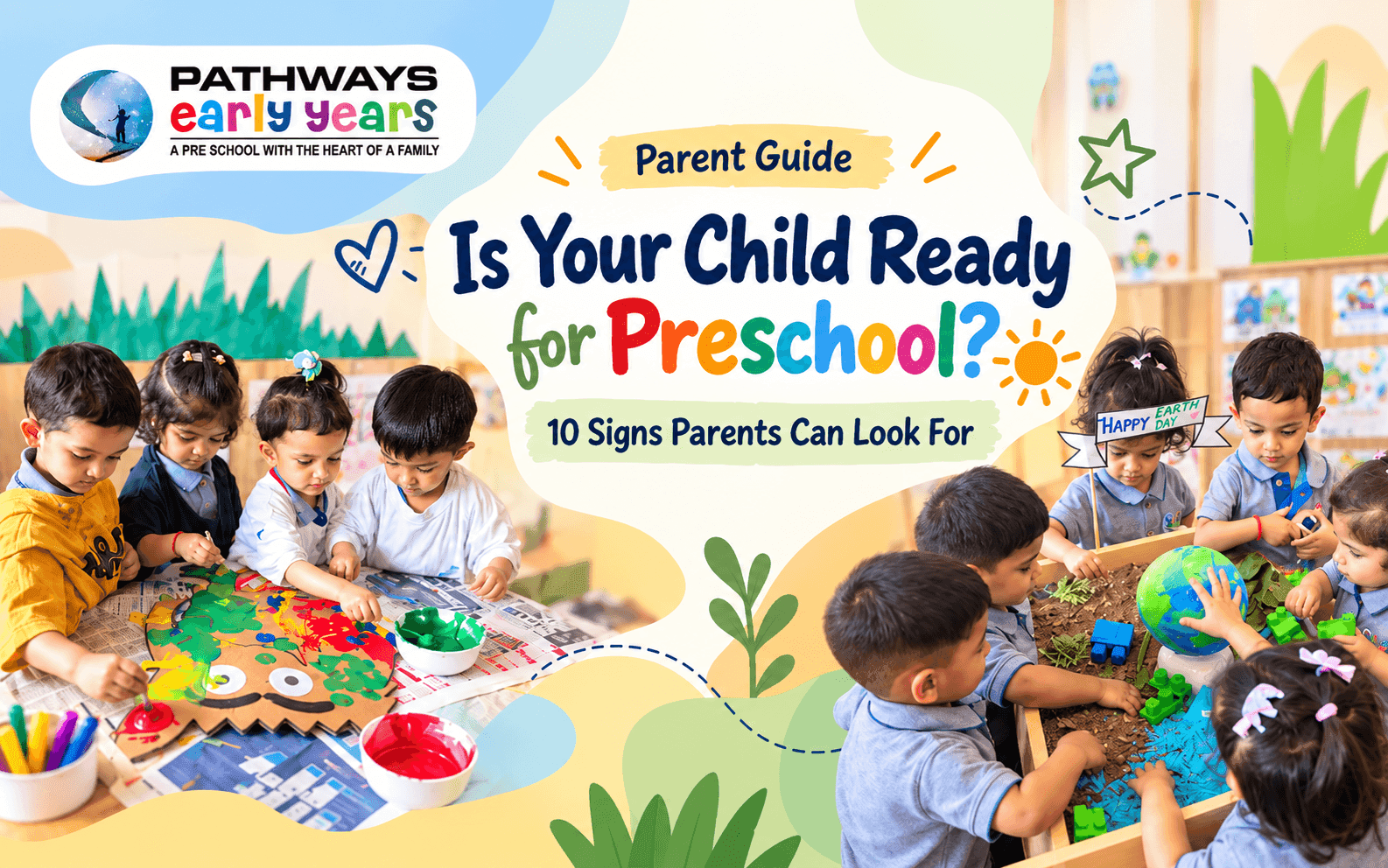
Worried your child isn't ready for preschool? Relax. Readiness isn't about reading or sitting still. Here are 10 gentle signs to help you see how far your child has already come.
Maya's mum stood at the preschool gate, holding a small blue bag. Her daughter was almost three. She couldn't recite the alphabet. She still cried a little when Mum left the room. But just ten minutes earlier, she had happily lined up pebbles with a child she had never met.
"Is she ready?" Mum wondered.
If you've asked that question too, you're not alone. Many parents worry about letters, sitting still, or tears at drop-off. But preschool readiness is about much more than academics. It includes communication, independence, emotional regulation, curiosity, social interaction, and the ability to manage simple routines.
As it turns out, Maya was already showing several readiness signs. Her mum just hadn't noticed them yet. The 10 signs below can help you spot them in your own child too.
What Does Preschool Readiness Really Mean?
Preschool readiness means a child has developed enough social, emotional, communication, physical, and independence skills to participate comfortably in a preschool environment.
In simple terms, it means your child can manage a few hours in a group setting with the support of caring teachers. Early childhood development covers several areas:
Emotional readiness: coping with small frustrations and separation
Social development: noticing and playing near other children
Communication: sharing needs and understanding simple directions
Physical independence: eating, handwashing, and handling belongings with help
Curiosity: wanting to explore, ask, and try
Routines: following a simple daily rhythm
Preschool readiness does not mean your child must already read, write, or do maths. Preschool is where those early skills begin.
10 Signs Your Child May Be Ready for Preschool
1. They Can Spend Some Time Away From You
Separation from parents is often the biggest worry. A child who happily waves goodbye while staying with a grandparent may be getting comfortable with short breaks.
Time with caregivers, relatives, or a short activity class all count. A few tears or some hesitation are normal. What matters is that your child can usually settle with comfort and reassurance.
2. They Can Communicate Their Basic Needs
Children don't need perfect speech. They do need ways to let an adult know what they need, such as:
asking for water
saying they are hungry
telling an adult they need the toilet
showing or saying when they are hurt
Language skills for preschoolers include words, short phrases, and gestures that adults can understand. If your child can get their message across, that is a strong start.
3. They Can Follow Simple Instructions
Preschool days run on small directions. Teachers might say:
"Put your bag here."
"Wash your hands."
"Sit on the mat."
"Put the toy back."
Does your child do this at home? Following one-step instructions, and sometimes two-step ones, is a helpful readiness sign. It shows they are listening and understanding.
4. They Show Interest in Other Children
Social skills for preschool readiness start with curiosity about peers. Your child might watch other children play, try to join in, or play beside a friend at the park.
Sharing and turning-taking often need adult support at this age. Perfect sharing isn't expected. Interest in others is a lovely sign that social development is growing.
5. They Are Becoming More Independent
Independence skills for preschool grow bit by bit. Look for small steps, like:
eating on their own
drinking from a cup
putting toys away
trying to put on shoes
washing hands with guidance
carrying their own bag
Self-help skills take practice, and messy attempts count. Do not worry if some of these are still developing.
6. They Can Manage Basic Toilet Needs
Many children are still learning here, and that is okay. Preschool policies on toilet training differ, so check with your preschool [Link to admissions page].
What helps most is your child recognising the urge and telling an adult. Even if accidents still happen, that awareness is a helpful step.
7. They Can Focus on an Activity for a Short Time
Preschoolers are naturally active, so long sitting is not expected. A healthy sign is being able to stay with an activity for a few minutes, such as:
listening to a short story
finishing a simple puzzle
colouring
building with blocks
playing with clay
Short bursts of focus are perfectly age-appropriate.
8. They Are Curious and Interested in Learning
Curiosity is often a stronger readiness signal than knowing letters. Watch for a child who:
asks "why?"
explores objects
looks at books
enjoys stories and songs
experiments with toys
This is learning through play, and it is how young children build understanding. You can see what this looks like in practice on the Pathways Early Years, where painting, early maths games, music, and friendship-building are part of everyday learning.
9. They Are Beginning to Handle Emotions With Support
Emotional readiness for preschool doesn't mean a child never gets upset. It means they are starting to recover with help. For example, they may:
calm down after disappointment
accept comfort from another trusted adult
sometimes use words to show anger
move from one activity to another with guidance
Emotional development in young children is still unfolding, so adult support remains important.
10. They Can Adjust to a Simple Routine
Preschool follows a predictable rhythm: snack time, play time, story time, outdoor play, and clean-up. Children who are used to regular mealtimes, naps, and bedtimes often find the preschool transition easier.
Routines help children feel safe because they know what comes next.
Does My Child Need to Know ABCs and Numbers Before Preschool?
No. Most children do not need to read, write, or do formal maths before starting preschool.
What matters more is:
communication
curiosity
listening
confidence
social interaction
independence
willingness to learn
Good preschool programmes build early literacy and numeracy through play, stories, songs, and hands-on exploration. If your child already enjoys counting stairs or singing the alphabet, wonderful. If not, that is perfectly fine.
Preschool Readiness Checklist for Parents
Use this as a gentle guide:
☐ Can communicate basic needs
☐ Separates from parents for short periods
☐ Follows simple instructions
☐ Shows interest in other children
☐ Can join short activities
☐ Manages basic self-help tasks
☐ Shows curiosity
☐ Accepts simple routines
☐ Can ask for help
☐ Expresses basic emotions
☐ Enjoys imaginative play
☐ Can switch between activities with guidance
Your child does not need to tick every box. This checklist is only a guide.
How Parents Can Prepare a Child for Preschool
Preparing your child for preschool can be simple and fun. Try these steps:
Practise short separations with trusted caregivers.
Build a morning routine with regular wake-up and meal times.
Read books about preschool and talk about what happens there.
Encourage independence in eating and dressing.
Let them carry a small bag so it feels familiar.
Arrange playdates to practise being with peers.
Invite words: "Can you tell me what you need?"
Visit the preschool beforehand if possible Seeing the classroom, the teachers, and the play areas makes the first day feel less new. You can read about the preschool programme
Avoid fear-based talk such as "You'll have to behave there."
Speak warmly about teachers and new friends.
What If My Child Is Not Showing All These Signs?
That is very common. Children develop at different speeds, and readiness is not a race. Focus on progress rather than comparison. A child who could not wave goodbye last month but manages a small wave today is moving forward.
If you have questions, talk with preschool educators, early-years teachers, or a paediatrician or child development professional when appropriate. They can offer guidance based on your child's needs. Most of the time, a little time, patience, and practice make a real difference.
Final Thoughts
Remember Maya at the preschool gate, holding her little blue bag? She didn't know her alphabet. She still felt wobbly about goodbyes. But she was curious, interested in other children, and learning to handle big feelings. That was more than enough.
Preschool readiness is not about perfection. The strongest signs are usually curiosity, communication, growing independence, the ability to interact with others, and a willingness to join in with routines.
So instead of comparing your child with others, look at their overall development. Notice the small wins: a new word, a brave goodbye, a hand washed all by themselves.
Preschool is the beginning of your child's learning journey. With patience, warmth, and encouragement, you can help them walk through that gate with confidence, just like Maya.
Frequently Asked Questions
Many children begin preschool between about 2.5 and 4 years old, depending on the country and programme. The best age depends on your child's readiness, not just their birthday. Check the admission guidelines and talk with the preschool about what suits your child.
Look for signs that your child can be comforted, recovers from small upsets, and handles short separations with support. They may still cry sometimes, and that is normal. Emotional readiness means they are developing coping skills, not that they never feel upset.
Not always. Policies differ between preschools, so ask yours directly. Many programmes support children who are still learning. Being able to tell an adult when they need the toilet is helpful, but perfect independence is not usually expected right away.
No. Preschools introduce letters and numbers through songs, stories, and play. Communication, curiosity, and the ability to listen matter more. Knowing the alphabet is a bonus, not a requirement.
Crying at drop-off is common and usually temporary. Keep goodbyes short, calm, and consistent. Reassure your child that you will return. Teachers are experienced in comforting children, and many settle within minutes. If distress continues, talk with the teacher about extra support.
Visit the preschool if possible, read books about starting school, and practise the morning routine a week ahead. Talk positively about what they will do. Pack a familiar comfort item if allowed. Staying calm yourself helps your child feel secure.
Get in Touch
Still have questions? Fill out the form below and our team will get back to you shortly.