
Preschool Pros and Cons: Advantages and Disadvantages of Preschool
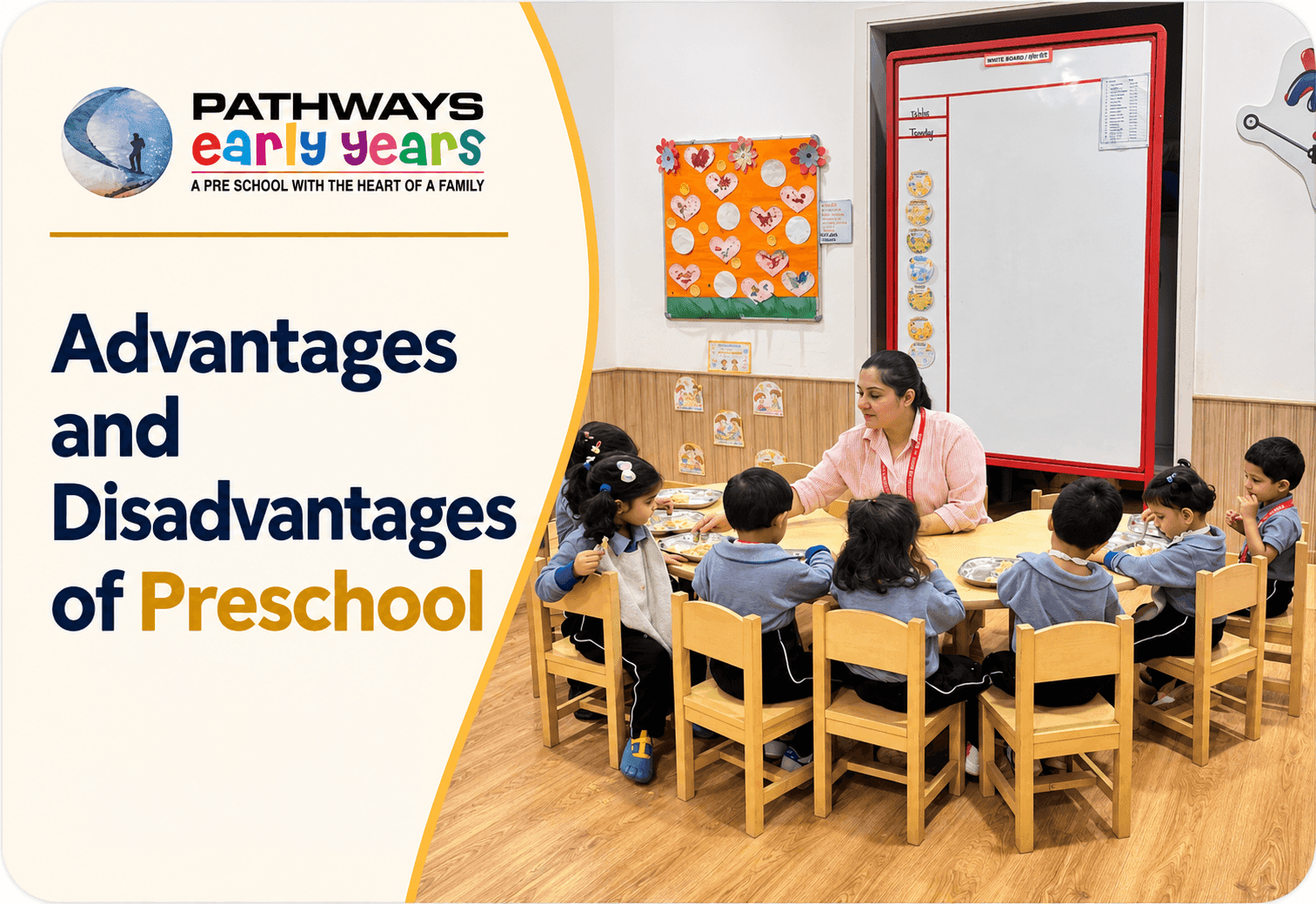
Preschool pros and cons explained: benefits, possible disadvantages like separation anxiety, and how parents can decide what suits their child.
Many parents pause before enrolling a child in preschool and ask a simple question: does it really help, or is it early academics dressed up as play? The honest answer sits in the middle. Weighing preschool pros and cons means looking at what a good programme gives a child and at what can go wrong for a particular child or family. The early years, roughly from one to six, are when a child's brain forms connections faster than at any later stage, so the experience matters. A well-run programme builds language, friendships and daily habits. A poor fit can bring tears and a schedule that does not match yours. This guide sets out the advantages and disadvantages of preschool in plain terms, using what Pathways Early Years in Shalimar Bagh publishes, so you can decide with clear information.
Key Takeaways
- Whole-child growth: Preschool supports thinking, language, social, emotional and physical development together, mostly through play.
- Routine and independence: A predictable day of snack time, play, story time, outdoor play and clean-up helps children build early habits.
- Separation anxiety is common: Crying at drop-off is a normal part of development. Some children settle quickly, while others need several weeks or longer.
- Overwhelm is possible: New people, spaces and routines can feel like a lot at first, especially for toddlers.
- Hours may be limited: Preschool days are shorter than a working day, so some families also need daycare.
- Fit matters more than reputation: No single curriculum suits every child, so visit, observe and ask before you enrol.
- Readiness is not academic: A child does not need to read or write to start preschool.
Preschool Pros and Cons at a Glance
Before the detail, here is the short version. The main advantages are early educational development, socialization and emotional growth, and an introduction to routine and structure. The main disadvantages are separation anxiety, the potential for overwhelm and limited flexibility in hours and routine. Pathways describes a gradual start, shorter initial hours and regular parent communication as ways a school supports children through the first weeks.
Advantages of Preschool: What Children Gain
The advantages of preschool come from regular, guided experience in a safe place, and they are the strongest part of the preschool pros and cons list. Pathways describes preschool as shaping far more than early academics, and the benefits below follow its published guidance on how preschool supports overall child development.
Early educational development
Early educational development in preschool happens through everyday activity, not formal lessons. Puzzles, sorting games, building blocks and storytelling help children observe, remember and solve problems. Open-ended questions from educators nurture curiosity and early maths, such as counting and comparing sizes. Preschool also introduces books, numbers and sounds before Class 1 begins.
Socialization and emotional growth
One of the most valued benefits of preschool is the chance to practise being with other children. Sharing a toy, waiting for a turn or joining a group game are small moments that build social skills. Children also learn to recognise feelings, express them and cope with frustration. Spending short periods away from parents builds confidence and resilience gradually. For more on this, read how daycare helps children develop social and communication skills.
Introduction to routine and structure
Preschool follows a predictable rhythm: snack time, play time, story time, outdoor play and clean-up. Predictable routines help toddlers build early independence and emotional security, even before they can say how they feel. Children also learn to manage their own belongings, move between activities and focus for age-appropriate stretches.
Language, movement and creativity
Songs, stories, role play and group talk expand vocabulary. Outdoor play and obstacle courses build balance and coordination, while painting, clay and pretend play encourage self-expression. Many of these activities support several areas of growth at the same time, which is why play-based learning is central to good preschool education. The post on the role of play in early childhood education explains more.
Disadvantages of Preschool: What Can Go Wrong
The disadvantages of preschool are real, and they differ from child to child. This side of the preschool pros and cons list is the one parents most often skip. Knowing them in advance makes it easier to plan around them and to ask better questions on a school visit.
Separation anxiety
Separation anxiety is the distress a young child may feel when apart from a parent or trusted caregiver. Pathways calls it a natural part of growing up, and notes that tears, clinging and hesitation at drop-off do not mean a child is unprepared for preschool. Our guide on toddler separation anxiety and the preschool transition offers practical steps.
Potential for overwhelm
A classroom brings new faces, sounds, furniture and expectations all at once. A toddler used to spending most of the day with family may find that overwhelming. Toddlers are also still learning to manage strong feelings, and they cannot always say what is wrong. Adjusting to group activities, snack times and transitions takes time. Pathways says it can take several weeks or longer, and that a supportive, consistent approach helps more than a fixed timeline.
Limited flexibility
Preschool runs on a planned curriculum and set hours. At Pathways, the preschool day is 4 hours for Pre-Toddlers and Toddlers and 4.5 hours for Pre-Nursery, Nursery and Kindergarten. That is shorter than a working day, so working families may need daycare as well. Ask about fees, programme hours and any daycare requirements before you decide. The comparison of preschool vs daycare lays out the trade-offs.
A poor fit for the child
No single curriculum works best for every family, and children develop at different paces. Pathways says learning at the toddler stage should match a child's readiness and not push formal academics too early. This is why the quality of the school matters as much as the idea of preschool itself.
How to Balance Preschool Pros and Cons With a Good Start
The potential disadvantages of preschool education are easier to handle when the school plans for them. Look for these features and ask about them directly.
A gradual start
Pathways keeps initial hours shorter for new children, lets parents stay with the child for some days, shares guidelines for settling in and holds an orientation programme. If your child is under two, its Holding Hands programme is a parent-child option for children aged 6 to 18 months, designed to build emotional security and familiarity with a new setting.
Small groups and clear ratios
Ask for the ratio and the section size. Pathways states a teacher to child ratio of 1:6 for children under two and 1:8 above two, with sections of up to 20 children, two teachers and one nanny. Details like these are published on its FAQs page.
Open communication
For very young children and new joiners, Pathways communicates with parents every day, and later sends monthly updates.
The right readiness, not the right age
Many children begin preschool between about 2.5 and 4 years, but readiness matters more than the birthday. Pathways lists signs such as spending a short time away from you, communicating basic needs, following simple instructions and showing interest in other children. Read the full preschool readiness checklist to see where your child stands.
Is Preschool Worth It? Choosing Between the Preschool Pros and Cons
Preschool is worth it when the programme fits your child and your family's routine. Consider these points before you enrol:
- Check your child's readiness: separation, communication, independence and interest in other children.
- Compare the age bands and daily hours with your work schedule.
- Visit the classroom and watch how educators speak to children.
- Ask about the ratio, safety, meals and how parents are updated.
- Plan a gradual start, with shorter days at first.
- Decide whether you also need daycare for the hours after preschool.
You can read the difference between preschool and nursery if you are unsure which programme fits, or the guide to the best preschool in Delhi for the points to compare across schools. Families in North West Delhi can also read the guide to the best preschool daycare in North West Delhi.
Conclusion: Weighing Preschool Pros and Cons
The preschool pros and cons come down to fit. The advantages of preschool are real: early educational development, socialization and emotional growth, and a first experience of routine and structure. The disadvantages, mainly separation anxiety, the potential for overwhelm and limited flexibility, are real too, but a school that plans a gradual start, states its ratios and keeps parents updated can support children through them. Look at your child's readiness, compare the hours with your schedule and visit before you decide. To see how a preschool can address these points, explore the preschool programmes at Pathways Early Years in Shalimar Bagh, or call +91 93195 44066 or +91 93195 44766.
Frequently Asked Questions
The main advantages are early educational development, social and emotional growth and an introduction to routine. The main disadvantages are separation anxiety, possible overwhelm and limited flexibility in hours. How much each one matters depends on your child and the school.
For toddlers, preschool is less about lessons and more about gentle, regular exposure to a new setting. Pathways says a good toddler programme focuses on gradual adjustment, familiar routines and sensory play such as water play and music.
Possibly. Crying and clinging are common signs of separation anxiety and do not mean your child is unprepared. Consistent goodbyes and gentle reassurance help, and so does talking to the teachers about how your child is settling.
It varies. Some children settle quickly, while others need several weeks or longer. A supportive and consistent approach works better than a fixed deadline.
Many children begin between about 2.5 and 4 years, depending on the programme. Pathways Early Years offers a Pre-Toddler programme from 18 months. The best age depends on your child's readiness, so check the admission guidelines and confirm age bands with the school.
No. Preschool is where early skills begin. Readiness is about communication, independence, emotional regulation, curiosity and managing a simple routine.
No. Preschool is built around structured early learning in set hours, while daycare is built around safe, caring supervision for longer hours. Some families use both. Pathways Early Years offers day care alongside its preschool programmes.
Visit in person and observe a class. Ask about the teaching approach, safety, ratio, communication and fees. You can contact the team at Pathways Early Years Shalimar Bagh to ask questions or arrange a visit.
Get in Touch
Still have questions? Fill out the form below and our team will get back to you shortly.