
Preschool Readiness Checklist: How to Know If Your Child Is Ready
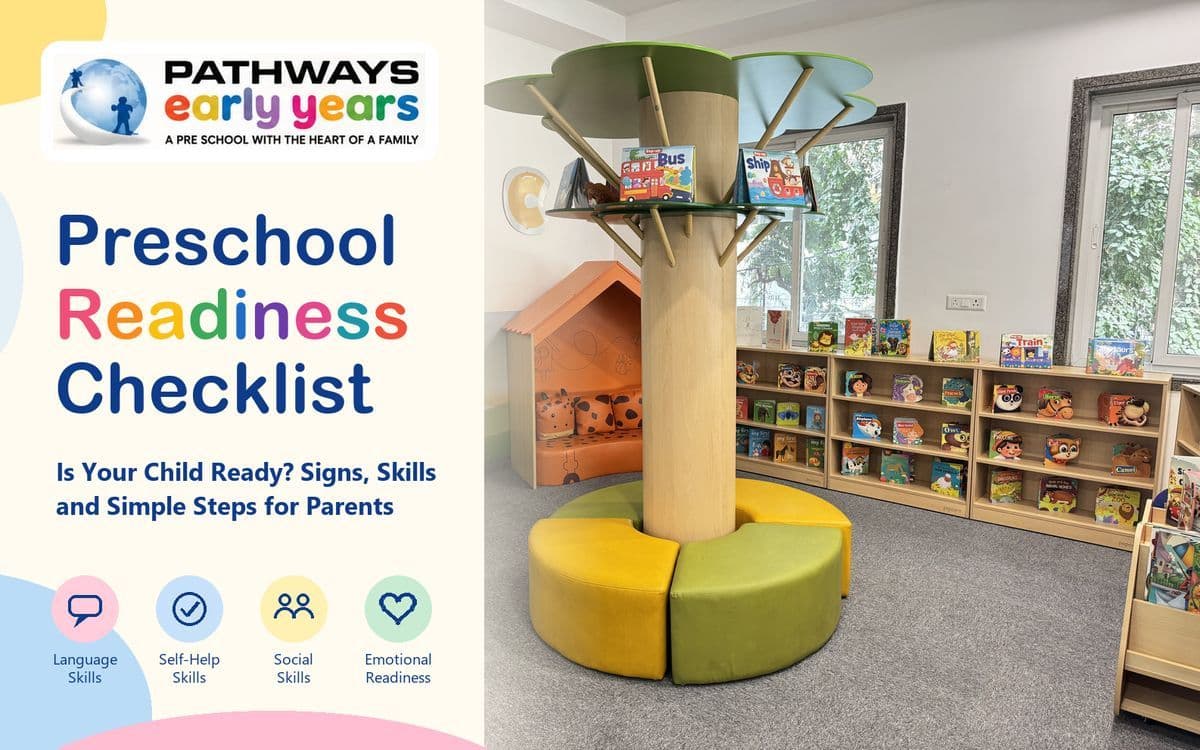
Use this preschool readiness checklist to see if your child is ready. Learn the signs, skills and simple steps that make the first day easier.
A preschool readiness checklist helps you look at your child's everyday skills and feelings before the first day. It is a guide for conversation and preparation, not an entrance test, and no child needs to tick every box.
Most children are ready when they can communicate basic needs, manage simple routines with help and feel safe with caring adults other than you. Readiness grows with practice, so a few gaps today are normal.
This guide gives you a practical checklist, the signs to watch for and simple ways to prepare your toddler. Use it to plan with confidence, whether you are exploring a preschool programme or comparing options across Delhi.
Key Takeaways
- Preschool readiness is about skills, feelings and routines together, not about reading or writing.
- Check five areas: communication, self-help, social skills, emotional readiness and early learning.
- Children develop at different speeds, so look for steady progress instead of perfection.
- Practise short separations, daily routines and simple choices at home before the first day.
- Speak to your paediatrician or the school if you have concerns about speech, hearing or development.
What Does Preschool Readiness Really Mean?
Preschool readiness means your child has enough comfort, communication and independence to join a group and enjoy learning through play. It does not mean knowing letters, numbers or how to hold a pencil perfectly.
Good preschools expect children to arrive as beginners. Teachers help with toileting accidents, feelings, sharing and new routines. What matters is that your child can cope with small challenges and look to an adult for help.
Think of readiness as a mix of four things: what your child can do, how your child feels, how your child plays with others and how your family prepares. Each part supports the others.
Preschool Readiness Checklist for Parents
Read each point and mark what your child does often or with a little help. Treat anything marked "not yet" as something to practise gently, not as a problem.
Communication Skills
- Uses words, sounds or gestures to ask for water, food, the toilet or help.
- Follows simple two-step instructions, such as "pick up the ball and bring it here".
- Responds to their name and listens briefly during a story or song.
- Can show you what they want, even if some words are unclear.
Strong communication skills in toddlers do not mean full sentences. Reading picture books, naming objects and talking through your day all build the language your child will use in class.
Self-Help Skills
- Shows awareness of the toilet, or is working towards it with support.
- Eats with their hands or a spoon and opens a tiffin box with help.
- Takes off a jacket or shoes and tries to put them back on.
- Washes hands with some guidance.
These preschool self-help skills build child independence before preschool. Let your child try first and step in only when needed. A few extra minutes at home saves frustration later.
Social Skills
- Plays near other children and shows interest in what they are doing.
- Is beginning to take turns with support.
- Accepts comfort from familiar adults, such as grandparents or caregivers.
- Joins a group activity for a short time, even if they watch first.
Social skills for preschoolers grow through practice. Playground visits, family gatherings and play dates give your child low-pressure chances to share, wait and notice other people's feelings.
Emotional Readiness
- Can be comforted within a reasonable time after being upset.
- Shows feelings with words, faces or actions that you can understand.
- Copes with small changes in routine without a long meltdown.
- Has spent short periods away from you with a trusted adult.
Emotional readiness for preschool is about trust. If your child believes that you will return and that the teacher will help, the day feels safer.
Early Learning and Movement
- Shows curiosity about books, colours, music and everyday objects.
- Scribbles, stacks blocks or enjoys play dough.
- Walks, climbs and runs with reasonable balance.
- Can focus on a favourite activity for a few minutes.
You do not need worksheets. Pretend play, puzzles, stories and outdoor games prepare children far better than early drills.
Signs Your Child Is Ready for Preschool
Beyond the checklist, everyday behaviour tells you a lot. These are common signs that a child may be ready to start:
- Your child watches other children with interest and wants to join in.
- Your child asks questions, points, explores and shows curiosity.
- Your child follows small routines, such as washing hands before a meal.
- Your child can wait briefly for a turn or for your attention.
- Your child is comfortable with other trusted adults for a short while.
If you see several of these signs, your child is probably ready to try a gentle start. Our guide on the 10 signs your child is ready for preschool goes deeper into each one, and nursery versus preschool explains which programme suits which age.
Preschool Developmental Milestones to Keep in Mind
Preschool developmental milestones are broad markers, not deadlines. Children reach them in their own time, and a few weeks or months either way is common.
In general, children entering preschool are learning to understand simple instructions, express needs, play beside peers and move around safely. They are also learning to manage small feelings with adult support.
If your child seems to have trouble hearing, speaking, moving or connecting with people, do not wait. Talk to your paediatrician. Early support makes a real difference, and a good school will work with you.
How to Prepare a Toddler for Their First Day of Preschool
Preparing toddlers for preschool works best in small steps over a few weeks. Here is a simple plan you can follow:
- Visit the school together. Walk around, meet the teacher and let your child see the classroom.
- Set a routine. Move bedtime, wake-up and meals close to the school schedule.
- Practise short separations. Leave your child with a trusted adult for an hour, then return as promised.
- Talk about school. Read picture books about preschool and describe what happens in a day.
- Let your child choose. A water bottle, a bag or a small comfort item gives a feeling of control.
- Practise the goodbye. Keep it warm, brief and the same every day.
Many families also find that a parent-and-child session helps first. Our post on parent toddler classes in Pitampura explains how shared play can ease the move to a group.
Handling Separation Anxiety Before Preschool
Separation anxiety before preschool is normal and often shows up as crying, clinging or sleep changes. It does not mean your child is not ready. It means your child loves you and is learning something new.
Stay calm, say goodbye clearly and never sneak away. Sneaking out can reduce trust. Tell your child when you will be back in simple terms, such as "after snack time". For more ideas, read our guide to toddler separation anxiety and the preschool transition.
Most children settle within a few weeks, though some take longer. Share what works at home with the teacher so that both of you respond in the same way.
When Your Child May Need More Time
Sometimes waiting a few months is the kinder choice. You might consider it if your child is very young for the programme, has been unwell or is going through a big change such as a new home or a new sibling.
Waiting is not failing. Use the time to practise routines, build language and spend relaxed time with other children. Then revisit the checklist and see what has changed.
Ask the school how they support children who need a slower start. A shorter first week, a parent nearby for the first days or a gradual increase in hours can all help.
Conclusion: Start With Confidence, Not Pressure
A preschool readiness checklist is most useful when it helps you see your child clearly: what they can do, what they are learning and where they need support. Readiness grows through daily routines, play, conversation and loving practice, not through pressure.
Choose the areas that need attention, practise them in small steps and talk with the school about your child's pace. If you would like to see a classroom and meet the team, explore the preschool programme at Pathways Early Years and plan a visit to Shalimar Bagh.
About the Author
Pathways Early Years Team
Frequently Asked Questions
Look for curiosity about other children, basic communication, simple routines and comfort with trusted adults. You do not need every skill. If most of the checklist feels familiar and your child recovers from small upsets, a gentle start is usually reasonable.
Helpful skills include asking for help, following simple instructions, eating with little assistance and showing the toilet need or working towards it. Social play beside others also helps. Teachers expect to teach the rest, so these are goals, not requirements.
Not always. Policies differ between schools, so ask the school directly. Many programmes support children who are still learning. What helps most is that your child shows awareness and that you share your routine with the teachers.
No. Crying at drop-off is common and usually settles as trust builds. Keep goodbyes short and consistent, and tell the teacher what comforts your child. If distress lasts for a long time, speak to the school about a gentler plan.
No. Preschool is built around play, songs, stories and hands-on activities. Letters and numbers come naturally through these. Talking, reading together and counting everyday things at home is more than enough preparation.
Start about four to six weeks ahead. This gives time to visit the school, adjust sleep and meal times, practise short separations and read books about preschool. If your child needs longer, begin earlier and go slowly.
Shy children often warm up by watching first. Let your child observe without pressure and tell the teacher about their style. If speech seems delayed compared with children of the same age, ask your paediatrician for guidance.
Yes. Use it to understand your child first, then ask each school how it supports communication, independence, settling in and parent updates. A school that welcomes your questions and invites a visit is usually a good sign.
Get in Touch
Still have questions? Fill out the form below and our team will get back to you shortly.