
Best Preschool in Delhi: A Parent's Guide to Choosing the Right Early Learning School
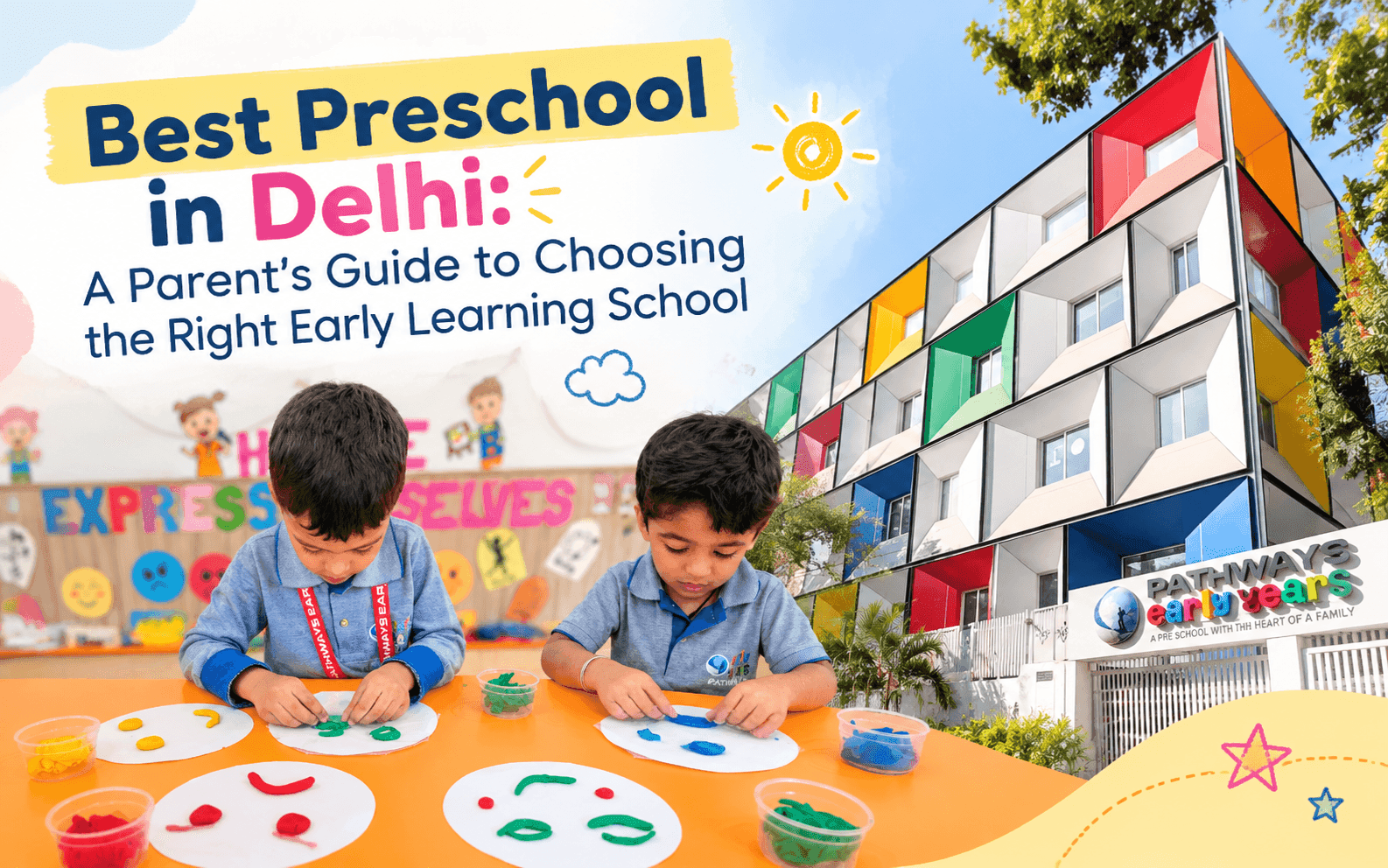
Looking for the Best Preschool in Delhi can feel overwhelming with countless choices available for young learners. From Montessori and play-based learning to safety standards, teacher quality, and curriculum approach, parents need the right information to make a confident decision. This guide covers everything you should consider before choosing the ideal early learning school for your child.
Choosing where your child takes their first steps into structured learning is one of the most important decisions a parent makes. With hundreds of options across the city, finding the Best Preschool in Delhi can feel overwhelming — every brochure promises "holistic development," every website has smiling toddlers, and every school claims to be the best fit. This guide cuts through the marketing noise and gives you a practical, experience-based framework to evaluate preschools so you can make a confident, informed choice for your child.
Why Choosing the Right Preschool Matters for Your Child's Early Development
The first six years of a child's life lay the foundation for everything that follows. This is when the brain develops fastest, and the environment a child is placed in during these years shapes how they think, feel, and interact with the world.
A good preschool supports development across four key areas:
Cognitive development — early reasoning, memory, curiosity, and problem-solving
Emotional development — confidence, emotional regulation, and resilience
Social development — sharing, cooperation, empathy, and communication with peers
Physical development — fine and gross motor skills through movement and hands-on play
Early childhood education in Delhi has evolved significantly over the past decade, with schools moving away from rote learning toward experiential, play-based approaches. Because these foundation years cannot be repeated, the environment a toddler spends their day in matters just as much as what they're taught at home.
How to Choose the Best Preschool in Delhi for Your Child
There's no single "correct" preschool — the right choice depends on your child's temperament and your family's priorities. That said, a few factors consistently separate strong schools from average ones.
Teaching methodology and curriculum approach. Ask whether the school follows Montessori, play-based, activity-based, or a blended curriculum. Understand how a typical day is structured — how much time goes into free play versus guided activities.
Teacher experience and child-to-teacher ratio. Qualified, patient, and experienced teachers make an enormous difference at this age. A lower child-to-teacher ratio (ideally 10–15 children per teacher) ensures each child gets individual attention.
Safety and security standards. This should never be a secondary consideration. CCTV coverage, background-verified staff, secure entry-exit systems, and childproofed classrooms are non-negotiable.
Learning environment and infrastructure. Visit in person. Look at classroom cleanliness, natural light, outdoor play space, and whether the environment feels warm rather than clinical.
Parent communication. Strong schools maintain regular, transparent communication — daily updates, parent-teacher interactions, and openness to questions and school visits.
Key Features Parents Should Look for in a Top Preschool in Delhi
When shortlisting a top preschool in Delhi, look beyond the interiors and marketing pitch. The features below genuinely impact a child's daily experience:
Play-based and activity-based learning that makes concepts stick through doing, not memorizing
Montessori-inspired methods, where relevant, that encourage independence and self-paced exploration
Creative outlets like art, music, storytelling, and imaginative play
Child-friendly classroom design with low shelves, accessible materials, and soft, safe furniture
Qualified and trained teachers who understand early childhood pedagogy, not just supervision
Strict hygiene standards, including clean washrooms, sanitized toys, and healthy snack policies
Visible safety measures, from fire safety equipment to trained staff for emergencies
A genuinely good best play school in Delhi will let you observe a class in session rather than only showing you an empty, staged classroom.
Importance of Early Learning Schools in Building Future Skills
The value of a strong preschool extends far beyond alphabets and numbers. What children absorb during these years quietly shapes their approach to learning for life. A quality early learning school helps children build:
Communication skills through storytelling, group discussions, and daily interaction
Confidence by encouraging children to express themselves and make small choices independently
Problem-solving ability through puzzles, building blocks, and open-ended play
Independence in self-care tasks like eating, dressing, and tidying up
Social skills such as sharing, turn-taking, and resolving small conflicts
Creativity through art, pretend play, and unstructured exploration
Preschool Admission in Delhi: Things Parents Should Know
Preschool admission in Delhi typically opens between November and February for the following academic session, though this varies by school. Here's what to keep in mind:
Age requirements generally start at 1.5 to 2 years for playgroup/toddler programs and go up to 4 years for pre-kindergarten, though exact cut-offs differ across schools.
School visits are essential — never enroll based on a website alone. A visit lets you observe teacher-child interaction, cleanliness, and the general mood of the classroom.
Interaction sessions, where used, are informal and meant to help teachers understand the child, not to "test" toddlers.
Documents typically required include the child's birth certificate, address proof, parent ID proof, and passport-size photographs.
Worth asking during a visit: What is the daily schedule like? How are conflicts between children handled? What is the policy for sick days or emergencies? How often do parents receive updates? What is included in the fee, and are there hidden charges?
If you're searching for a "preschool near me in Delhi," shortlist 3–4 schools within a reasonable commute, since a long daily commute can affect a toddler's mood and routine.
Why Montessori and Play-Based Learning Approaches Are Popular
Montessori preschool in Delhi options have grown popular because the philosophy respects a child's natural pace of learning. Rather than a fixed, teacher-led schedule, Montessori classrooms let children choose activities from a prepared environment, learning through hands-on materials designed for self-correction.
Core principles include:
Hands-on, sensory-based learning using specially designed materials
Self-paced progress, where children move to new concepts when they're ready, not on a fixed timeline
Mixed-age classrooms that encourage peer learning and mentorship
Learning through exploration rather than passive instruction
Play-based learning, whether or not it's strictly Montessori, works on a similar principle: children absorb concepts more deeply when they're engaged and enjoying the process, rather than being drilled.
Questions Parents Should Ask Before Selecting a Preschool
What curriculum and teaching methodology does the school follow?
What is the child-to-teacher ratio in each class?
What safety and security systems are in place?
Are teachers trained in early childhood education?
How does the school handle a child who is struggling to settle in?
What is the hygiene and cleanliness protocol?
Does the school offer daycare facilities if needed?
What is the total fee structure, including hidden costs?
How does the school communicate with parents?
Can parents visit or observe a class before enrolling?
A school that answers these questions transparently, without hesitation, is usually one worth taking seriously.
Conclusion
Selecting the Best Preschool in Delhi isn't about finding the school with the fanciest infrastructure or the longest list of activities — it's about finding an environment where your child feels safe, curious, and genuinely happy to learn. Focus on the fundamentals: qualified teachers, a thoughtful curriculum, strong safety standards, and open communication with parents. Investing time in this decision pays off, because quality early childhood education in Delhi doesn't just prepare a child for kindergarten — it shapes how they approach learning, relationships, and challenges for years to come.
Frequently Asked Questions
Most children start preschool between 1.5 and 3 years old, depending on the program — playgroup, nursery, or pre-KG.
Evaluate teaching methodology, teacher qualifications, safety standards, classroom environment, and parent communication before deciding.
Check the curriculum, child-to-teacher ratio, hygiene standards, safety measures, fee structure, and school visit experience.
Preschool is a broader term for early education before kindergarten, while play school specifically emphasizes learning through play and games.
It builds the cognitive, social, emotional, and physical foundation children need for lifelong learning and development.
Montessori suits children who thrive with self-paced, hands-on learning, but it's not inherently "better" — the right fit depends on the child's personality.
CCTV monitoring, verified staff, secure entry-exit points, childproofed furniture, and emergency protocols are essential safety features.
Get in Touch
Still have questions? Fill out the form below and our team will get back to you shortly.