
Preschool Admission Checklist: Everything Parents Need to Know
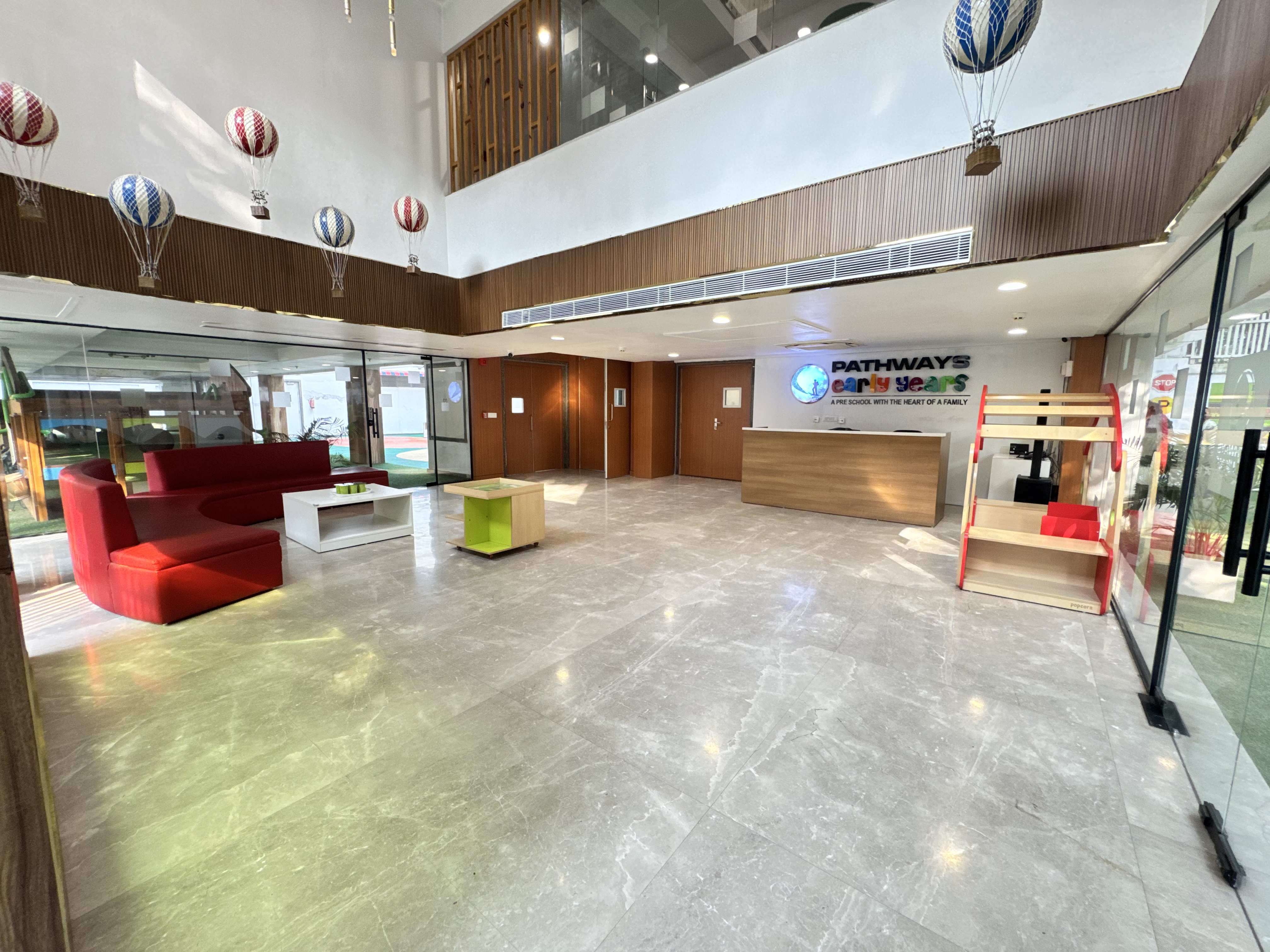
A preschool admission checklist covers four things: your child’s age against the school’s cut-off date, a birth certificate and parent ID, the registration steps, and a campus visit. Start three to six months early.
Most parents begin preschool admission with a list of schools and end up with a pile of loose papers, three different age rules and a form deadline nobody mentioned. The paperwork itself is rarely hard. The trouble is that every school asks for slightly different things, in a different order, at a different time of year. One missing document can slow the whole application. This guide gives you a single checklist you can carry to any school visit in Delhi. It covers age criteria, documents, the registration steps, what to observe on campus and the mistakes that cost families time. Where it helps, we show how Pathways Early Years Shalimar Bagh structures its programmes, so you can see the checklist applied on a real campus.
Key Takeaways
• Start early. Begin planning three to six months before the session you want, so visits and paperwork do not collide.
• Age rules differ by school. Confirm the cut-off date and the exact age band for each programme before you fill any form.
• Keep documents in one folder. Birth certificate, parent ID, address proof, immunisation record and photographs, with scans on your phone.
• The registration process is short. A typical sequence runs from enquiry to campus visit, form, informal interaction and seat confirmation.
• Visit before you decide. Watch how teachers speak to children, not only how the classroom looks.
• Check timings against your day. Pathways lists 3 hours for Pre-Toddlers and Toddlers, 4 hours for Pre-Nursery and 5 hours for Nursery and Kindergarten.
• Ask about care options. Day care and after school programmes matter if your working hours are longer than the school day.
What Preschool Admission Involves in Delhi
Preschool admission is less formal than primary school admission, but it still has a structure. You choose a school, check that your child fits the age band, submit documents, meet the team and confirm the seat. Each step has a small catch. A school may fix its age cut-off on a particular date, close registrations early for popular batches, or ask to meet you before it offers a seat. None of this is unusual. It simply means you cannot treat one school’s rules as every school’s rules.
Why a checklist saves more time than a school list
A school list tells you where to go. A checklist tells you what to carry and what to ask once you get there. Parents who visit three schools in a week often forget which school asked for which paper. A single page with a tick beside each item removes that confusion and keeps your questions the same across campuses.
How preschool admissions differ from school admissions
Preschool admissions are often built around an informal meeting rather than marks. Schools look at age, readiness to join a group, health information and whether the daily timings suit your family. That shifts your job from preparing a child for an exam to preparing yourself with the right questions.
Age Criteria for Preschool Admission by Programme
Age is the first filter. The preschool page at Pathways Early Years Shalimar Bagh groups children into five programmes, each with a set age band and daily duration.
• Pre-Toddlers: 12 months to 2 years, 3 hours a day.
• Toddlers: 2 to 3 years, 3 hours a day.
• Pre-Nursery: 3 to 4 years, 4 hours a day.
• Nursery: 4 to 5 years, 5 hours a day.
• Kindergarten: 5 to 6 years, 5 hours a day.
How the cut-off date works
Schools usually count your child’s age on a fixed date, not on the day you apply. A child who turns three a few weeks after the cut-off may be placed in the earlier programme. Ask the admissions team which date applies and whether there is any flexibility. Do this before you fill the form, not after.
Documents Required for Preschool Admission
Documents are where most families lose time. Requirements vary, so treat the list below as the usual set and confirm it with the school. Keep originals at home, carry photocopies and store scans on your phone.
Your child’s documents
The birth certificate is the standard proof of age. Schools also ask for an immunisation record and a few passport-size photographs. If your child has an allergy, a recent illness or a medication routine, write it on one sheet. Teachers can only act on what they know.
Parent documents
Expect to show photo ID and proof of address for the parent or guardian who will deal with the school. Aadhaar, passport, voter ID or a recent utility bill are commonly accepted. Keep the name and address consistent across all of them. A mismatch between the ID and the form is a small error that can delay verification.
Health and safety information
Add emergency contacts, your paediatrician’s name and the names of adults who may collect your child. This is more than paperwork. It is the first thing a teacher reaches for on a difficult morning.
also read: Preschool readiness checklist
The Preschool Registration Process, Step by Step
The preschool registration process follows a similar order at most schools, though the names of the steps change. Use this sequence as a map and ask each school where it differs.
1. Enquire. Call, email or fill the enquiry form. Pathways lists its phone numbers and email on its website.
2. Visit the campus. See classrooms, play areas and the daily routine while children are present.
3. Submit the form and documents. Hand over photocopies and ask for a dated receipt.
4. Attend the interaction. Many schools hold a short, informal meeting with the child and parents. It is a conversation, not an exam.
5. Confirm the seat. Read the admission letter and fee details carefully before you accept.
Play School Requirements Beyond the Paperwork
Play school requirements are not only on paper. They also include practical fit: timings, travel and how your child copes with a group.
Daily timings and how they fit your routine
Hours rise with age. Pathways runs 3-hour sessions for Pre-Toddlers and Toddlers, 4 hours for Pre-Nursery and 5 hours for Nursery and Kindergarten. Check that pick-up time works with your schedule. If it does not, ask about day care, which Pathways offers as a separate programme.
Readiness for separation and routine
No child arrives fully ready. A few weeks of practice still helps. Leave your child with a relative for an hour, keep regular meal and nap times, and talk about school in a calm, cheerful voice. Avoid promising to stay if you plan to leave. Trust breaks faster than it builds.
What to Check During a Campus Visit
A visit tells you what a brochure cannot. Go when children are in class, and take notes the same day while the details are fresh.
Safety, hygiene and supervision
Look at entry and exit control, clean washrooms, safe flooring and how adults supervise outdoor play. Notice whether staff bend down to a child’s eye level when they speak.
Teacher interaction and ratio
Tone tells you more than a policy document. A teacher who kneels, listens and waits for a toddler’s answer is doing the real work of early learning. Ask how many children each teacher manages.
Curriculum in the daily routine
Pathways says its curriculum draws on its experience with the IB Primary Years Programme and is inspired by Reggio Emilia, Playway and Montessori approaches. Its homepage lists creative play, early math fun, music and movement and friendship activities. Whichever school you visit, ask how the curriculum shows up in a normal day. You can see photos of activities such as dance performances and summer camp on the events page.
Common Admission Mistakes to Avoid
• Applying late. Seats in sought-after batches can fill before the session begins.
• Applying to one school only. Two or three shortlisted schools give you a real comparison.
• Assuming every school wants the same papers. Ask for the list in writing.
• Over-preparing the child. Flashcard drills at two years old add pressure and little else.
• Skipping questions about timings and fees. Surprises after the seat is confirmed are harder to fix.
Quick Preschool Admission Checklist
1. Confirm your child’s age band and the school’s cut-off date.
2. Shortlist two or three schools close to home or work.
3. Collect the birth certificate and immunisation record.
4. Prepare parent ID and address proof, with photocopies and scans.
5. Keep recent passport-size photographs ready.
6. Write down allergies, health notes and emergency contacts.
7. Book a campus visit and note your observations the same day.
8. Ask about timings, day care and the interaction process.
9. Read the admission letter and fee details before you accept.
10. Save receipts, forms and contact details in one folder.
How Pathways Early Years Shalimar Bagh Supports Admission
Pathways Early Years Shalimar Bagh is at NS-4, AD Block, Poorbi Shalimar Bagh, Delhi 110088. Its preschool programmes run from Pre-Toddlers to Kindergarten. It also offers Day Care, Holding Hands and After School Programmes as separate programmes. The school describes its small size as the reason it can give each child personal attention. To ask about seats, call +91 93195 44066 or email admissions.sb@pathways.in. You can also reach the team through the contact page.
Conclusion
A good preschool admission is mostly preparation. Know the age band, gather the documents once, follow the registration steps in order and visit before you commit. Ask direct questions about timings, supervision and daily routine, and write down the answers. Then choose the school where your child is spoken to with patience, not the one with the longest brochure. If you are exploring options in Shalimar Bagh, speak to the Pathways Early Years team and ask to see a classroom in session.
About the Author
Pathways Early Years Team
Frequently Asked Questions
Three to six months before the session you want is a comfortable window. It gives you time to shortlist schools, visit them and gather documents without rushing. Start earlier if you plan to compare several campuses.
It depends on the school. At Pathways Early Years Shalimar Bagh the first programme, Pre-Toddlers, is listed for children from 12 months to 2 years. Always confirm the cut-off date with the admissions team.
The usual set is the child’s birth certificate, immunisation record, passport-size photographs, and parent ID and address proof. Some schools add a medical or allergy form. Ask for the school’s own list in writing.
Many preschools use a short, informal interaction with the child and parents instead of a written test. Ask the school what its process looks like so you can prepare your child calmly.
That depends on seat availability in the relevant programme. Contact the admissions team with your child’s date of birth and ask what is open. A direct enquiry is faster than waiting for the next cycle.
Preschool is a structured learning programme with fixed hours. Day care offers longer care hours for working families. Pathways lists both as separate programmes, so you can ask which combination suits your day.
Look for basic comfort with separation, a steady routine and interest in other children. Readiness is a spectrum, not a test. A good teacher will help your child settle, so share what you notice during the visit.
Yes, and you should. A visit shows how teachers speak to children and how the day runs. Call or email the school to arrange a time when classes are in session.
Get in Touch
Still have questions? Fill out the form below and our team will get back to you shortly.