
How to Prepare Kids for School: 10 First Day of School Tips for Parents
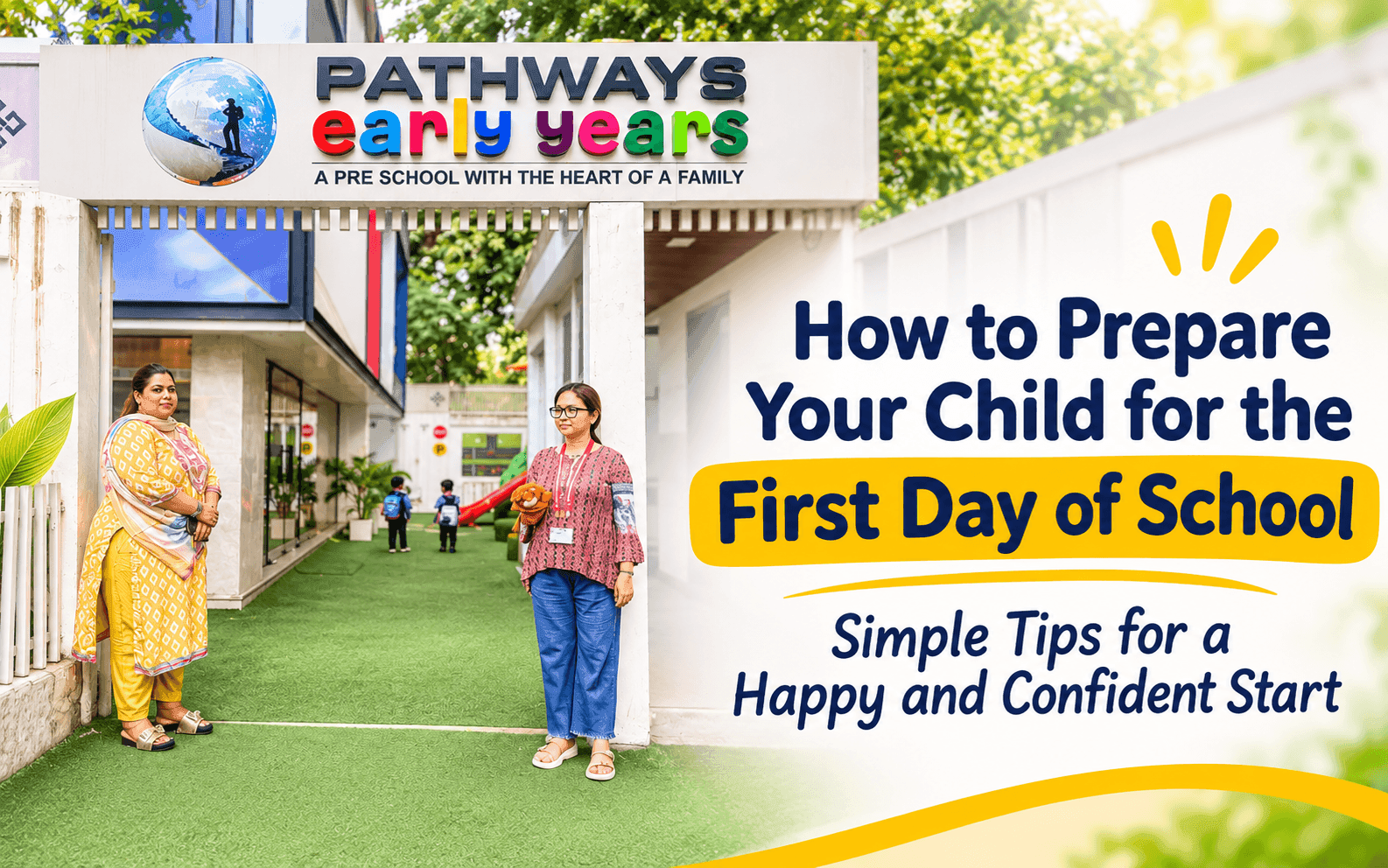
To prepare kids for school, start a school-day routine two to three weeks early, visit the school, talk about what to expect, practise short separations and pack supplies together. Keep goodbyes calm and cheerful.
The night before school starts, many parents lie awake wondering if their little one is ready. If you are searching for how to prepare kids for school, you are not alone. The first day of school is a big step for children and families alike, and a little planning turns nervous energy into excitement.
Good preparation is not about teaching your child to read before day one. It is about routines, familiarity and emotional comfort, so your child walks into class feeling safe. This guide shares practical first day of school tips that work for real families, from early years educators at Pathways Early Years in Shalimar Bagh, Delhi.
Key Takeaways
• Start routines early: Shift sleep, wake-up and meal times to the school schedule two to three weeks before the first day in school.
• Make school familiar: A school visit, a quick hello to the teacher and a few picture books turn the unknown into something your child can picture.
• Practise small separations: Short playdates and time with trusted adults build the confidence children need when you say goodbye.
• Name feelings, do not dismiss them: Listening to worries and using a simple goodbye ritual eases first-day-of-school anxiety in children better than constant reassurance.
• Your calm matters: Children read their parents’ mood, so a relaxed, cheerful goodbye helps your child adjust to school faster.
What Does School Readiness for Kids Really Mean?
School readiness for kids means a child feels safe away from home, can follow simple routines and is curious to learn. At this age, emotional comfort and basic independence matter far more than academic skills.
Most young children need a few everyday skills before school begins. These include using the toilet or asking for help, opening a lunchbox, hanging up a bag and following a two-step instruction. Social skills such as greeting others, sharing and taking turns matter just as much. A play-based preschool programme builds these skills gently, which is why many parents see early learning as the best way of preparing children for school.
How to Prepare Kids for School: 10 First Day of School Tips
To prepare for the first day of school, build a steady routine, visit the school, talk about what to expect, practise separation and pack supplies together. Begin two to three weeks ahead so changes feel gradual rather than sudden.
1. Reset the daily routine early. Move bedtime and wake-up time by 10 to 15 minutes every few days until they match the school schedule. Keep meals and screen time predictable too. A rested child handles new faces and new rules far better.
2. Visit the school together. Walk around the building, find the classroom and the washroom, and say hello to the teacher if possible. Familiar surroundings reduce fear of the unknown. Even a short look from the gate helps.
3. Talk about school in simple, happy words. Explain that your child will meet friends, play, sing and listen to stories. Invite questions and answer honestly. Avoid saying “don’t cry”, which can make big feelings seem wrong.
4. Read stories about starting school. Picture books show characters who feel nervous and then enjoy their day. Reading together opens an easy conversation about your own child’s feelings. Choose books with warm, simple pictures.
5. Shop for supplies together. Let your child pick a bag, water bottle or lunchbox. A sense of ownership builds excitement. Label every item with their name and practise opening the lunchbox so mealtime feels easy.
6. Practise short separations. Arrange a playdate or leave your child with a grandparent for an hour. Always say goodbye clearly and return when promised. Trust grows every time you keep your word.
7. Build social skills through play. Practise greeting, sharing, taking turns and asking for help during games at home. These small habits help a child first day school experience feel friendly from the start.
8. Plan a calm morning. Lay out clothes, pack the bag and decide breakfast the night before. Wake up a little earlier than needed so no one rushes. A calm start sets the tone for the whole day.
9. Create a goodbye ritual. A special wave, a hug and a short phrase such as “See you after story time” work well. Keep it brief and cheerful. Long, drawn-out goodbyes can raise anxiety instead of lowering it.
10. Prepare yourself as a parent. Your feelings are real too, and children sense them. Share your worries with a friend or partner rather than with your child. Smile at the gate, then take a few quiet minutes for yourself.
How Do Independence Skills Help Children Adjust to School?
Independence skills help children adjust to school because they reduce frustration and build pride. A child who can wash hands, carry a bag or ask for water feels capable, and capable children feel calmer in a busy classroom.
Practise these skills in short, playful bursts rather than long lessons. Let your child zip the bag, open the tiffin, put on shoes and hang a jacket on a hook. Praise effort instead of perfect results. If your child struggles with the toilet routine, mention it to the teacher in advance so support is ready. Each small success at home adds to your child’s confidence on the school first day and beyond.
How Can You Reduce First-Day-of-School Anxiety in Children?
To reduce first-day-of-school anxiety in children, acknowledge their feelings, give them a clear picture of the day and keep goodbyes short and warm. Predictability is the strongest antidote to worry.
Child first day school nerves are completely normal. Start by asking open questions such as “What are you looking forward to?” and “What feels a little tricky?” Listen first, and resist the urge to fix the worry straight away.
Next, describe the day step by step: arrival, play, snack, story time and pick-up. Children feel brave when they know what comes next. A small comfort item, such as a family photo tucked in the bag, can also help. Settings that focus on gentle transitions, like the Holding Hands programme at Pathways Early Years, are designed to support confident growth for little ones and parents together.
Preparing kids emotionally for school is an ongoing process. If nerves last beyond the first few weeks, or show up as stomach aches, sleep problems or strong refusal, speak with the teacher early.
Which First Day of School Activities Help Children Settle In?
The best first day of school activities are simple, playful and low-pressure. Drawing, role play, story time and music help children relax, connect with others and learn the new routine without pressure.
Try these at home during the week before the 1st day of school:
• Play “school” with soft toys: Take turns being the teacher, sing a hello song and line up for snack time.
• Draw “my first day” pictures: Ask your child to draw what they think school looks like, then talk about it.
• Make a countdown chart: Add a sticker each evening so the school first day feels like something to look forward to.
• Practise the journey: Walk or ride the route once or twice so the first day to school feels familiar.
• Pack the bag together: Make a simple checklist with pictures and tick items off as you go.
On the day itself, take a happy photo at the gate and keep the morning light. Children who feel relaxed at drop-off find it easier to join circle time, creative play and group games once the first day of the school year begins.
What Should Parents Do After the First Day?
After the first day, keep questions light, celebrate effort and protect the routine. Expect your child to be tired or emotional, and allow plenty of time to rest and play.
Skip questions like “Did you cry?” and ask “What was the funniest thing today?” instead. Offer a snack, some quiet time and a cuddle before you talk about school. Most children need two to three weeks to feel settled, so patience matters more than perfection.
Working parents may also want reliable care after school hours. A full-day day care setting offers comfort, routine and attentive care, while a structured after school programme keeps afternoons creative and consistent. Both help children keep the rhythm they have built.
Why Parents Choose Pathways Early Years in Shalimar Bagh
At Pathways Early Years, the focus is on celebrating the uniqueness of every child. Families in Shalimar Bagh, Delhi, choose the school for several clear reasons:
1. Learning through play. Painting, drawing, crafting, early maths with blocks and games, and daily music and movement make learning joyful.
2. A range of programmes. Pre School, Day Care, Holding Hands and After School Programmes support families at different stages of early childhood.
3. A safe and loving environment. Children are encouraged to be inquisitive explorers who dream, create and discover.
4. Easy to reach. The campus is at NS-4, AD Block, Poorbi Shalimar Bagh, Shalimar Bagh, Delhi, 110088.
Conclusion: Helping Your Child Begin School with Confidence
A smooth first day of school comes from small, steady steps. Reset the routine, visit the school, read stories, practise goodbyes and keep your own tone calm. These habits turn nervous moments into proud ones and give your child a strong start.
If you would like to see how play-based learning supports this journey, visit Pathways Early Years in Shalimar Bagh, Delhi. Call +91 93195 44066 or +91 93195 44766, or write to admissions.sb@pathways.in to ask about admissions and campus visits.
Frequently Asked Questions
Begin two to three weeks before the first day to adjust sleep and meal routines. Start separation practice, such as short playdates, one to two months ahead if your child has never been away from you.
Keep it simple, positive and honest. Say, “You will play, meet friends and listen to stories, and I will pick you up after.” Invite questions and avoid promising that nothing will feel difficult.
Most early years schools ask for a water bottle, tiffin, spare clothes, wipes and a labelled bag. Always check the school’s own list, and add a small comfort item if the school allows it.
Crying at drop-off is common and usually passes within minutes of you leaving. Say a short, warm goodbye, never sneak away, and ask the teacher for an update. Most children settle within a few weeks.
Yes. Clinginess, restless sleep and extra tantrums often appear before big changes. Offer extra cuddles, stay consistent with routines and keep talking about school in a calm, positive way.
Let your child choose supplies, read school-themed books and play “school” at home. Mention friends, songs and play time. Your own positive tone is the most powerful motivator.
This depends on the school’s policy. Many early years settings allow a short, gradual stay in the first days. Follow the teacher’s guidance, and keep the final goodbye brief and confident.
Speak with the teacher if anxiety lasts beyond three to four weeks or comes with stomach aches, poor sleep or loss of appetite. A paediatrician or child counsellor can offer further support if needed.
Get in Touch
Still have questions? Fill out the form below and our team will get back to you shortly.