
Play in Early Childhood Education: Why Play-Based Learning Works
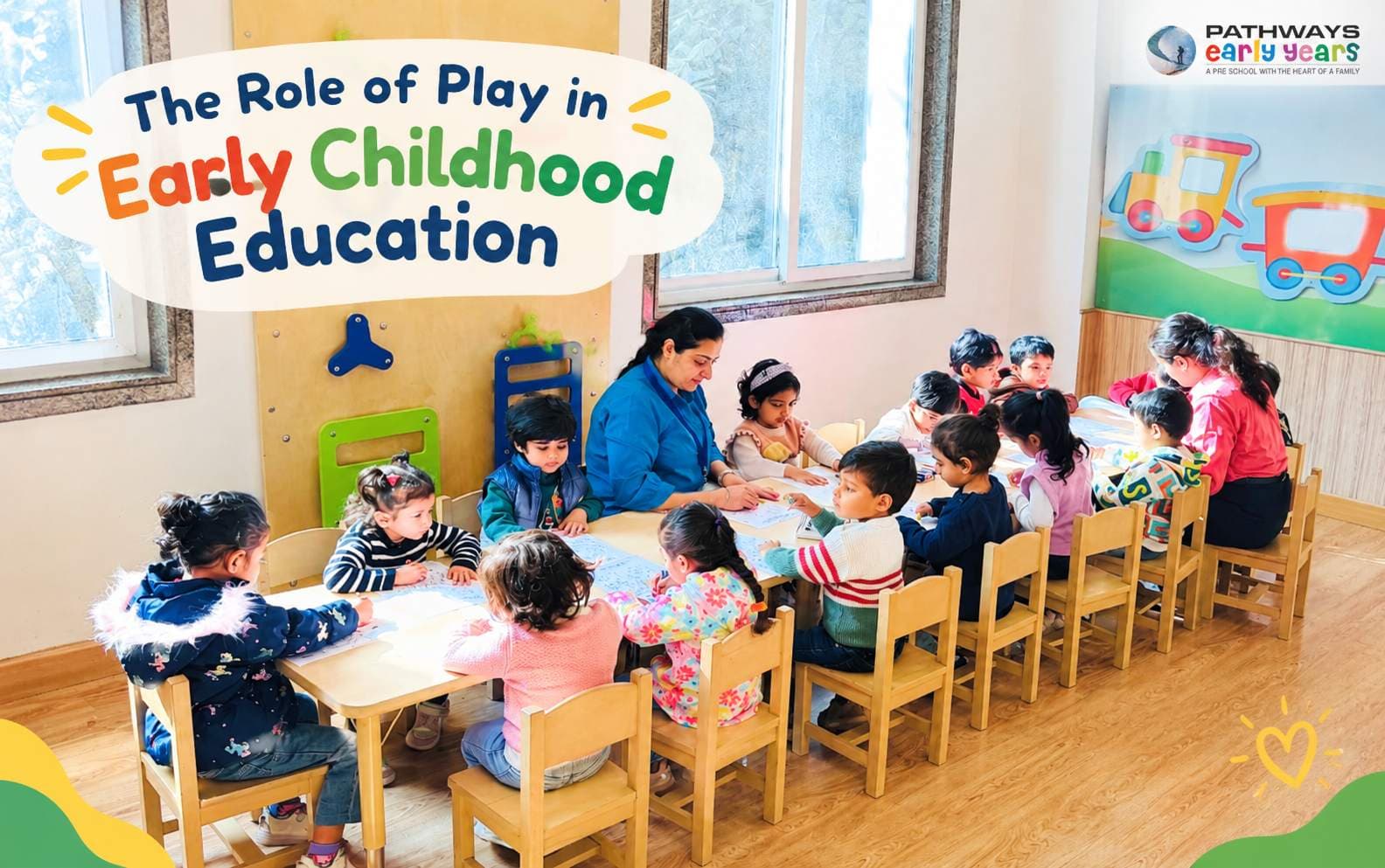
Play in early childhood education is the main way children aged 2 to 6 build thinking, language, social and motor skills. Guided, child-led play turns everyday activities into lasting learning foundations.
Walk into a joyful preschool classroom and you will see children stacking blocks, pouring water, dressing up and negotiating whose turn it is. This is play in early childhood education, and it is not a break from learning. It is how young children learn best.
Many parents still ask whether play-based learning is serious enough to prepare a child for school. Child development research and India's NEP 2020 both point the same way. Children aged three to six build thinking, language and social skills through hands-on, joyful experiences. This guide explains what play does for the growing brain, which types of play matter, and how teachers and parents can support it.
Quick Answer
Play in early childhood education is the main way children aged 2 to 6 build thinking, language, social and motor skills. Guided, child-led play turns everyday activities into lasting learning foundations.
Key Takeaways
• Play is learning: Children aged two to six understand the world through movement, senses and imagination, so play is the most developmentally suitable way to teach them.
• Every skill grows together: One block-building session can strengthen maths concepts, vocabulary, fine motor control and teamwork at the same time.
• Guided play works best: Teachers who prepare rich materials, observe closely and ask open questions support deeper learning than worksheets alone.
• Home matters too: Short, regular, child-led play with a parent builds bonding, language and confidence without expensive toys.
• Policy backs it: NEP 2020 recommends play-based and activity-based learning for the foundational stage, which covers ages three to eight.
What Is Play in Early Childhood Education?
Play in early childhood education means purposeful, child-led activity that teachers observe and support. Children explore materials, test ideas and make meaning without fear of getting it wrong. This is the foundation of play-based learning.
In a good early years classroom, play is planned, not accidental. Teachers prepare the space, watch what children do and extend their thinking with questions. The child leads and the adult shapes the environment. That balance separates real learning through play from simple free time.
Children under six think through action. They need to touch, move, taste, build and pretend before abstract ideas such as numbers and letters make sense. Play gives them the bridge between real experience and symbols.
Why Is Play Important for Early Childhood Development?
Play is important because it develops the brain, body, language and emotions together. Brain development is especially rapid in the early years, and play gives children the repeated, hands-on practice that strengthens it. Here is how play supports the main areas of early childhood development.
Cognitive development. When a child works out how to stop a block tower from falling, she forms a guess, tests it and adjusts. Pretend play builds memory and flexible thinking. These habits grow into the problem-solving skills children later use in maths, science and daily life.
Language development. Play gives children a reason to talk. They narrate, negotiate roles, ask questions and invent stories. A pretend shop or kitchen is a setting where new words stick because they are tied to real action.
Social and emotional skills. Sharing a toy, waiting for a turn and settling a disagreement are real lessons in empathy and self-control. Role play also lets children rehearse big experiences safely, such as visiting a doctor or starting school.
Motor skills development. Running, climbing and dancing build strength and balance. Threading beads, drawing and shaping clay refine the finger control needed to hold a pencil. Strong motor skills support writing readiness later on.
What Are the Main Types of Play in Preschool?
Preschool play usually falls into six types. A balanced classroom offers all of them every week, so children practise different skills.
• Sensory play: Sand, water, dough and textured materials help children explore with every sense.
• Physical play: Running, jumping, balancing and ball games build strength, coordination and confidence.
• Constructive play: Blocks, puzzles and loose parts teach planning, spatial thinking and early maths.
• Imaginative play: Pretend kitchens, doctor sets and dress-up let children try on roles and practise language.
• Creative play: Painting, drawing, music and crafts give children ways to express ideas with no single right answer.
• Games with rules: Simple board games and group games teach turn-taking, patience and fair play.
Imaginative play deserves special attention. A child who can create and sustain a pretend story is practising symbolic thinking, which later supports reading and writing. You can see many of these play types in action in the events and photo gallery.
How Does Play-Based Learning Support Early Literacy and Maths?
Play-based learning supports early literacy and maths by giving abstract ideas a physical form. Children count real objects before they write numbers, and they tell stories before they read them. Play makes these first steps meaningful.
In maths, sorting buttons by colour teaches grouping. Building with blocks introduces shape, size and balance. Board games add counting and one-to-one matching. Children are doing mathematics long before they hold a worksheet.
In literacy, rhymes, songs, puppet shows and story corners build listening skills and sound awareness. Role play with menus, signs and shopping lists shows children that print carries meaning. These experiences prepare the ground for reading.
Child-led learning also builds motivation. When children choose what to explore, they tend to stay with a task longer and ask more questions. Teachers can then link that curiosity to concepts in the preschool curriculum. Children who enjoy this style of learning can continue it through the after school programmes.
What Is the Role of Teachers in Supporting Play in Early Years Classrooms?
The teacher's role is to design the environment, observe closely and extend learning without taking control. Skilled early years teachers act as guides, not lecturers. They follow five simple steps.
• Prepare the space: Arrange open-ended materials at child height so children can choose and explore on their own.
• Observe first: Watch what interests each child before stepping in. Observation shows where a child is in their development.
• Ask open questions: A question such as "What do you think will happen next?" encourages reasoning instead of yes or no answers.
• Join without taking over: Offer a new idea or word, then step back and let the child continue.
• Reflect and document: Notes and photographs help teachers plan the next experience and share progress with parents.
This approach is often called guided play. It keeps the joy of free exploration and adds the intentional teaching that helps children move forward.
How Can Parents Support Learning Through Play at Home?
Parents can support learning through play at home by offering simple materials, following the child's lead and giving undivided attention for short, regular periods. Expensive toys are not required.
• Follow your child's lead: Join the game instead of directing it. Describe what you see and ask curious questions.
• Use everyday objects: Cardboard boxes, utensils, cloth and containers often inspire more creativity than battery-operated toys.
• Play outdoors: A park visit supports movement, fresh air and sensory experiences.
• Read, sing and talk: Rhymes and bedtime stories build vocabulary and a love of books.
• Balance screens: Passive viewing does not replace hands-on play, so keep it limited and watch together when you can.
Praise effort rather than results. Saying "You kept trying different blocks" builds a growth mindset better than a general "Good job". Parents who want gentle guidance on early development can also explore Holding Hands.
What Does a Play-Based Day Look Like at Pathways Early Years?
At Pathways Early Years in Shalimar Bagh, learning through play shapes the daily experience. The preschool programme introduces children to learning through play and discovery, with a focus on strong early foundations.
Children take part in four kinds of experiences: creative play such as painting, drawing and crafting; early maths fun with toys, blocks and games; music and movement through singing and dancing; and friends and sharing activities that build teamwork.
Families who need longer hours can explore the day care programme, which offers a safe, caring space with comfortable routines, so children enjoy play and learning throughout the day.
How Does NEP 2020 Support Play-Based Learning in India?
NEP 2020 treats the early years as the base of all later learning. It introduces the foundational stage, which covers ages three to eight, and recommends play-based and activity-based learning for this stage. The National Curriculum Framework for Foundational Stage, released in 2022, gives schools further guidance on putting this into practice.
For parents, this means a play-based preschool is aligned with national policy. It is not a lighter alternative to real education. Look for classrooms that offer movement, storytelling, art and hands-on materials, with teachers who observe and record each child's progress.
Conclusion: Let Children Play, Let Them Grow
Play in early childhood education is the most natural and developmentally sound way for young children to build the skills they need for school and life. Through play, they grow in thinking, language, emotional balance and physical coordination at the same time.
The best results come when teachers plan rich play experiences and parents continue the same spirit at home. Letting children play is not lowering expectations. It is building the foundation for confident, curious learners.
To see play-based learning in action, visit Pathways Early Years at NS-4, AD Block, Poorbi Shalimar Bagh, Shalimar Bagh, Delhi, 110088. Call +91 93195 44066 or +91 93195 44766, or write to admissions.sb@pathways.in to speak with the team. You can also explore the Pathways Early Years website.
About the Author
Pathways Early Years Team
Frequently Asked Questions
Play-based learning can begin in the earliest years, because babies and toddlers already learn through touch, sound and movement. Many preschools welcome children from around two to three years. Choose a setting that suits your child's age and comfort level.
For children under six, early childhood research supports play-based approaches because young children learn through hands-on experience. Letters and numbers are still taught, but through games, stories and activities instead of long seat-work. A balance of play and gentle structure works well.
Yes, when the programme is well planned. Play builds attention, language, number sense, fine motor control and social confidence, which are the skills Grade 1 relies on. Ask the school how it introduces pre-writing and early reading in the final preschool year.
There is no single fixed number, but young children need plenty of daily time for both active and quiet play. A healthy day mixes free play, outdoor movement, stories and creative activities. If your child is restless, shorter and more frequent play breaks can help.
Watch for new words, longer pretend stories, better problem solving and growing patience with friends. Ask the teacher for observations or photographs of play moments. Progress in play often shows up as small, steady changes instead of test scores.
Not in the same way. Passive screen viewing offers little movement, touch or conversation, which are the ingredients of play. If your child uses screens, keep sessions short, choose quality content and follow up with a related hands-on activity.
Solo play is normal and healthy, especially for younger children, and it builds focus and independence. Gently introduce one friend or a parallel activity side by side. If your child seems very distressed around others, speak with the teacher or a paediatrician.
Visit the classroom and look for open-ended materials, outdoor space, children's art on display and teachers who talk with children at eye level. Ask how the school observes progress and shares updates with families. Families in North-West Delhi can start with Pathways Early Years in Shalimar Bagh.
Get in Touch
Still have questions? Fill out the form below and our team will get back to you shortly.