
How Daycare Helps Children Develop Social and Communication Skills
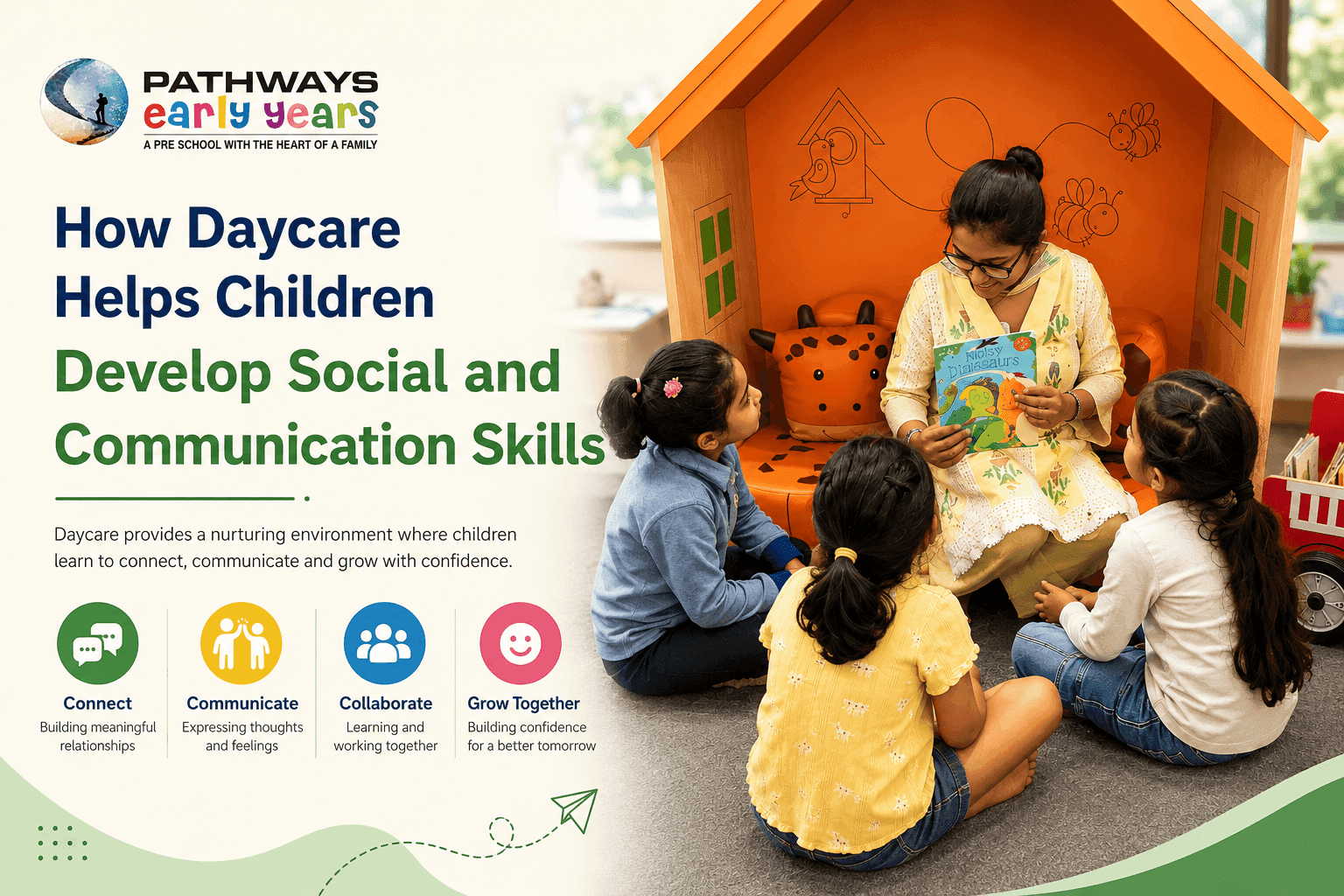
Every conversation, shared toy, and group activity helps toddlers build confidence, communication, empathy, and teamwork. Discover how the right daycare can turn everyday play into essential social and communication skills.
The first time your toddler shares a crayon without being asked, or comes home retelling a small story from her day, you are watching something quietly extraordinary. Building daycare social and communication skills happens through daily peer interaction, guided play, and warm adult support. In a well-run daycare, children learn to listen, take turns, express feelings, and use language for real purposes — the foundation they will carry into preschool, friendships, and the wider world.
Key Takeaways
Daycare builds social muscle early. Regular peer interaction in daycare gives toddlers safe, repeated practice in sharing, turn-taking, and joining group play.
Language grows through use. Songs, stories, questions, and everyday conversation drive rich language development in daycare.
Emotions get named and managed. Warm caregivers help children label feelings, calm down, and resolve small conflicts.
Play is the curriculum. Circle time, role-play, art, and collaborative games are daycare learning activities designed to teach real social skills through fun.
Fit matters more than fanciness. Warm relationships, small groups, and rich daily talk matter more than flashy facilities.
Why Early Social and Communication Skills Matter
Between ages one and four, children build language, empathy, and self-control faster than at any later stage. The everyday habits they form now — greeting a friend, waiting a turn, asking for help — become the automatic behaviours they carry into school. Strong communication skills in early childhood also support learning across every other area, because a child who can ask questions and follow instructions learns faster. In this sense, early childhood social development sets the tone for classroom success and healthy relationships for years to come.
What Are Daycare Social and Communication Skills?
Daycare social and communication skills are the everyday abilities children develop while spending time with peers and caregivers. They include sharing, taking turns, listening, expressing needs, showing empathy, and using words to solve problems. Together, they form the foundation of confident, cooperative behaviour.
These skills usually cluster into three overlapping areas:
Social skills — sharing, cooperation, empathy, and conflict resolution.
Communication skills — vocabulary, listening, conversation, and non-verbal cues.
Emotional skills — recognising feelings, expressing them safely, and calming down.
How Does Daycare Support Social Skills Development?
Daycare supports social skills development by giving children daily opportunities to interact with peers in a structured, supervised setting. Through repeated group activities for young children and gentle adult guidance, toddlers learn how to greet friends, share resources, work together, and handle small disagreements without needing an adult rescue every time.
Peer Interaction in Daycare
A consistent group of peers gives children a practice ground for real relationships. Two toddlers building a block tower together learn that Meera's turn comes after Aarav's, that a shared idea works better than two separate ones, and that friends notice when you smile at them. This kind of steady social interaction for toddlers is hard to replicate at home.
Sharing, Turn-Taking, and Teamwork
Teamwork and sharing skills in children develop when they see the behaviour modelled and get to try, fail, and try again. Passing crayons at the art table, waiting for the swing, or holding a picture book so a friend can see the pictures are all tiny lessons that add up over months.
Empathy and Conflict Resolution
Children slowly learn to notice when a friend is sad, offer comfort, and use words instead of grabbing. Skilled caregivers act as coaches rather than referees — asking, "How do you think Ayaan is feeling right now?" — so children learn to solve problems themselves.
How Does Daycare Support Communication Skills in Early Childhood?
Daycare supports social skills development by giving children daily opportunities to interact with peers in a structured, supervised daycare environment. Teachers narrate activities, ask open-ended questions, and read aloud daily. Songs, rhymes, and storytime build vocabulary, while everyday exchanges with peers give toddlers real reasons to speak, listen, and be understood.
Vocabulary and Everyday Conversation
Toddlers pick up dozens of new words each week when adults talk with them, not at them. Language development in daycare grows fastest when a teacher describes what is happening — "You're stacking the red block on the blue one" — and then waits for the child to respond.
Active Listening and Following Instructions
Circle time, two-step directions such as "Please pick up your cup and put it in the bin," and back-and-forth conversation train the muscles of attention. Over time, children learn to hold a thought, follow a sequence, and reply on topic.
Storytelling and Preschool Communication Skills
By age three or four, children begin telling small stories — first the painting, then the snack. This ability to sequence and share events is the seed of preschool communication skills, and it predicts later reading and writing success.
Emotional Development in Daycare
Emotional development in daycare happens when children learn to name their feelings, calm their bodies, and respond to the feelings of others. Warm caregivers coach children through frustration, celebrate small wins, and model steady, kind responses that toddlers slowly copy and make their own.
In practice, this sounds like: "I can see you're upset that the tower fell. Let's take a deep breath and try again." Over time, children move from big reactions to smaller ones, and from adult help to self-help. Art, song, and pretend play also give them safe ways to express feelings that words cannot yet reach.
Daycare Learning Activities That Build These Skills
The best daycare learning activities blend structured guidance with hands-on play. Each of the following builds specific social and language abilities while feeling like fun to the child.
Circle Time
Everyone sits together to greet, sing, and share news. Circle time teaches children to wait, listen, contribute, and feel part of a group, while setting a calm, predictable rhythm for the day.
Role-Play and Pretend Corners
A play kitchen, doctor's kit, or shopkeeper setup lets toddlers try on real-life roles. Pretending to serve tea or bandage a doll's arm builds vocabulary, empathy, and the social scripts children will use in real life.
Storytelling and Read-Alouds
Shared stories introduce new words, ideas, and feelings. Retelling a favourite tale helps children practise sequencing, and answering questions about it builds comprehension long before reading begins.
Music and Movement
Songs with actions build memory, rhythm, and language, and give shy children a low-pressure way to join in. Group dances and rhymes create instant social connection.
Art and Craft
Sharing glue sticks, choosing colours together, and describing their own creations gives children real reasons to talk, cooperate, and take pride in something they made themselves.
Collaborative Games and Group Play
Simple team games, block-building with a partner, or setting the snack table together teach cooperation without competition. These group activities for young children are where teamwork begins.
Guided Free Play
Free play with a watchful adult nearby is where children put every other skill into practice. Teachers step in only when needed, so children build confidence solving problems in their own way.
What Should Parents Look For in a Daycare That Supports Social and Language Development?
A good daycare in Shalimar Bagh has warm caregivers, small group sizes, a balanced daily schedule, and plenty of conversation. Look for teachers who get down to the child's level, calm routines, varied learning materials, and honest updates about your child's progress.
Practical things to notice on your visit:
Warm, responsive caregivers who talk with children throughout the day, not just supervise them.
Low teacher-to-child ratios so every toddler is seen, heard, and gently guided.
A play-based curriculum with both structured and free-play blocks.
A calm, well-organised space with cosy corners, open shelves, and books within reach.
Consistent daily routines for arrival, meals, rest, and play, so children feel safe.
Rich language exposure through reading, singing, describing, and questioning.
Clear parent communication about your child's social and emotional milestones.
Outdoor play time and daily physical movement in a safe area.
The Benefits of Daycare for Children and Toddlers
The benefits of daycare for children go well beyond childcare. Daycare benefits for toddlers include stronger language, better social confidence, healthier emotional regulation, and an easier adjustment to preschool.
Rich social interaction for toddlers with same-age peers.
Vocabulary growth through daily conversation and shared reading.
Confidence to try, fail, and try again with an adult close by.
Early problem-solving, self-help, and independence skills.
Smoother transitions to preschool and formal school.
Regular, honest updates that reassure parents.
Setting Your Child Up for a Lifetime of Connection
Every conversation, song, and shared crayon is helping your child become someone who can listen, speak up, and get along. Choosing a nurturing, play-based daycare with warm educators and small groups gives them daily practice in the skills that matter most. The strength of daycare social and communication skills built in these early years quietly stays with a child for life.
About the Author
Pathways Early Years Team
Frequently Asked Questions
Children begin learning social skills from infancy through eye contact, sound, and simple turn-taking. Most centres accept children from around one to two years, when peer play and daycare benefits for toddlers become especially valuable for building sharing, communication, and confidence
Daycare helps shy children by offering low-pressure ways to join in — sitting near a group, humming along to songs, or watching before playing. Consistent caregivers, familiar routines, and a small circle of peers slowly build the trust these children need to speak up.
Not always. What matters most is the quality of interaction, not the setting. A daycare rich in conversation, storytelling, and songs supports strong language development, but a chatty, book-loving home does the same. Many children benefit from a healthy mix of both.
Look for small signs: your child talks about friends by name, uses new words, greets people, plays alongside or with others, and can name feelings. Ask the teacher about turn-taking, group participation, and how your child handles small conflicts during the day.
Some tears at drop-off are normal, especially in the first few weeks. A short goodbye ritual, a familiar comfort item, and honest teacher feedback usually help. If distress continues for many weeks, talk to the caregivers about routines and connection at the centre.
Get in Touch
Still have questions? Fill out the form below and our team will get back to you shortly.